Joe's Journal All trips »

Boston

The Seaport, the Freedom Trail, Back Bay, and the Fenway · 2018, 2023, and 2025

Boston started as the Shawmut Peninsula, in the homeland of the Massachusett people, where English Puritans settled in 1630. A century and a half later, it was the town where colonists argued, then fought, over being taxed by a Parliament they had no vote in.

Then Boston kept building. It filled in its own harbor, opened a library free to all, and made fortunes in the China trade. The Freedom Trail tells the story of liberty. The photos here are the postcard. The small print under each one asks who got the liberty, who paid for it, and who made money along the way.

Tap a numbered pin on the map to jump to that stop.

The RouteToday and 1795
Interactive map. Tap 1795 to see where the shoreline was twenty-two years after the Tea Party. Watch what happens to the Seaport and Copley Square.
Showing today’s shoreline.
Map of central Boston with nine numbered stops: the Seaport, the Fort Point Channel by the Tea Party ships, the Central Burying Ground on Boston Common, the Liberty Tree site, the Union Oyster House, Copley Square, Fenway Park, the Museum of Fine Arts, and the Isabella Stewart Gardner Museum. A second layer shows the 1795 shoreline.Charles RiverBoston HarborFort Point ChannelBack BaySeaportOld South Meeting HouseGriffin's Wharf site1Seaport2Fort Point Channel3Central Burying Ground4Liberty Tree site5Union Oyster House6Copley Square7Fenway Park8MFA9Gardner Museum0.5 milesN ↑
Shorelines for 1795 and 1995 come from a public Boston historic-shoreline GIS layer, and they are approximate. That layer counts salt marsh as land, so the Fens look solid in 1795. They were marsh until they were filled in the late 1800s. Pins are approximate. Tap a pin to jump to that stop.

In 1795, Copley Square, the library, and almost all of the Seaport were open water or tidal flats. Boston more than doubled the size of the original peninsula by filling in its own bays.

Some backgroundBefore the stops

Liberty, and who paid for it

The short version: who had a vote, who paid, and who pushed back.

A short history of Boston
Before 1630The Shawmut Peninsula, a small, nearly island piece of land in the homeland of the Massachusett.
1630English Puritans settle the peninsula and name it Boston.
1675 and 1676During King Philip’s War, the colony holds somewhere between 500 and 1,100 Christian Native people on Deer Island in the harbor through the winter. Many do not survive.
1761A girl of about seven arrives in Boston on the slave ship Phillis. The Wheatley family buys her and names her after the ship.
1765The Stamp Act. A crowd hangs the stamp collector in effigy from a big elm. It becomes the Liberty Tree.
1768Customs officials seize John Hancock’s sloop Liberty on smuggling charges, and a riot follows.
1773The Tea Act makes legal tea cheaper, not dearer. On December 16, about 340 chests go into the harbor.
1774Parliament closes the port of Boston and ends much of Massachusetts’ self-government.
1790s to 1850Boston merchants grow rich in the China trade, paying for tea with opium that China had banned.
1848The Boston Public Library is founded, the first large free municipal library in the country.
1857 to 1900The Back Bay and the Fens are filled in with gravel brought by train.
1898More than 21,000 Hawaiians have signed petitions against annexation. Congress annexes Hawaiʻi anyway.
1945 and 1959The Red Sox try out Jackie Robinson and sign no one. Fourteen years later they become the last major league team to field a Black player.
1990Thieves take 13 works from the Isabella Stewart Gardner Museum. None have been recovered.
2017 and 2018The Boston Globe reports that the Seaport, built with more than $18 billion in public money, is 89 percent white. The next year, Yawkey Way goes back to being Jersey Street.
Over Boston Harbor2018, early afternoon
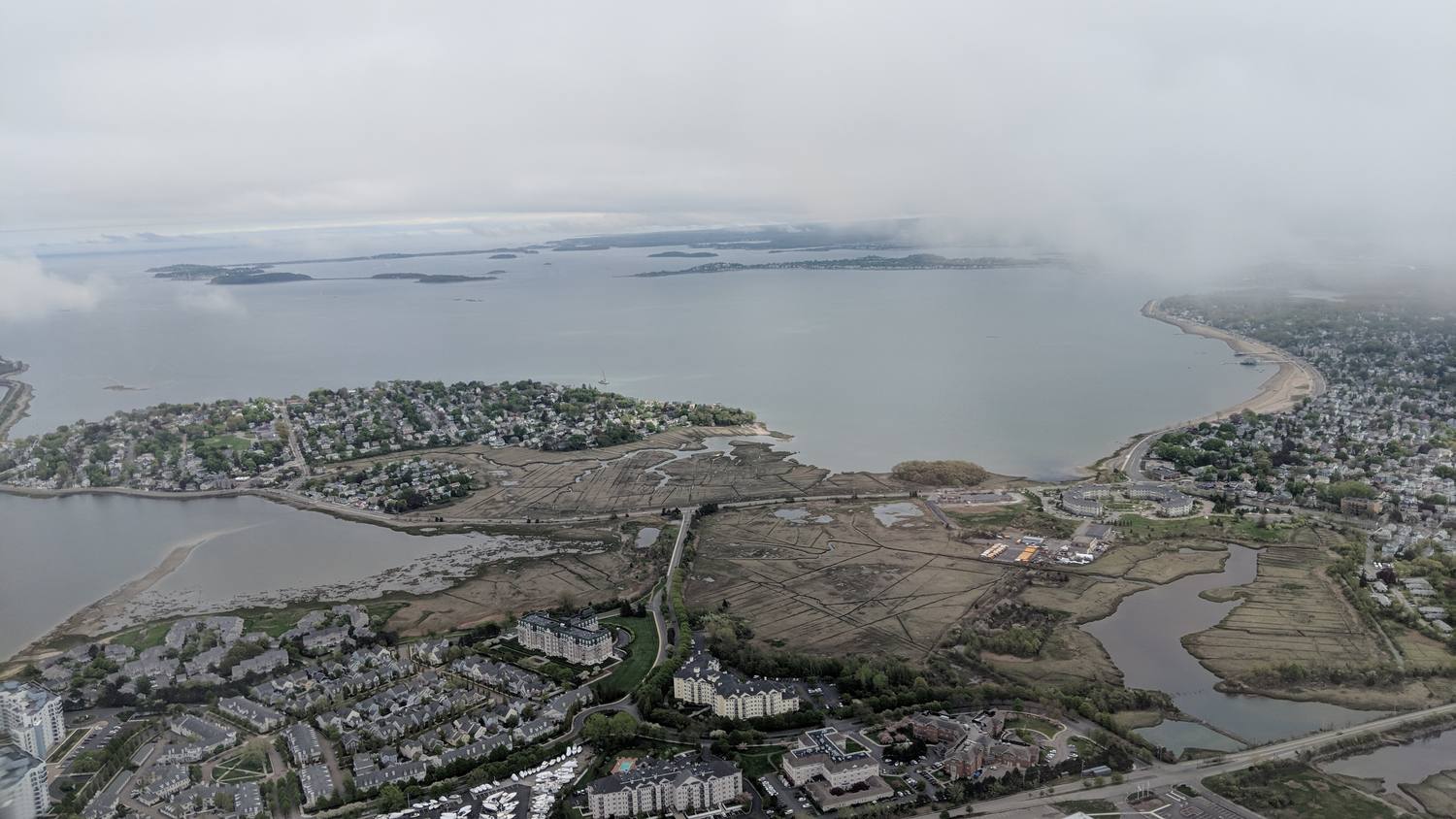
Looking down from a plane window at a gray bay, a peninsula of houses, salt marsh and a winding river in the foreground, a long curving beach on the right, and low islands on the hazy horizon.

Coming in over the harbor

A window seat, a low cloud ceiling, and the whole south side of the harbor laid out like a map, with the Harbor Islands lined up on the horizon.

In the fall of 1675, the colony rounded up Native people who had converted to Christianity and shipped them out to Deer Island, in this harbor, with little food or shelter for the winter. Many did not live to see spring.

1Seaport2023, morning
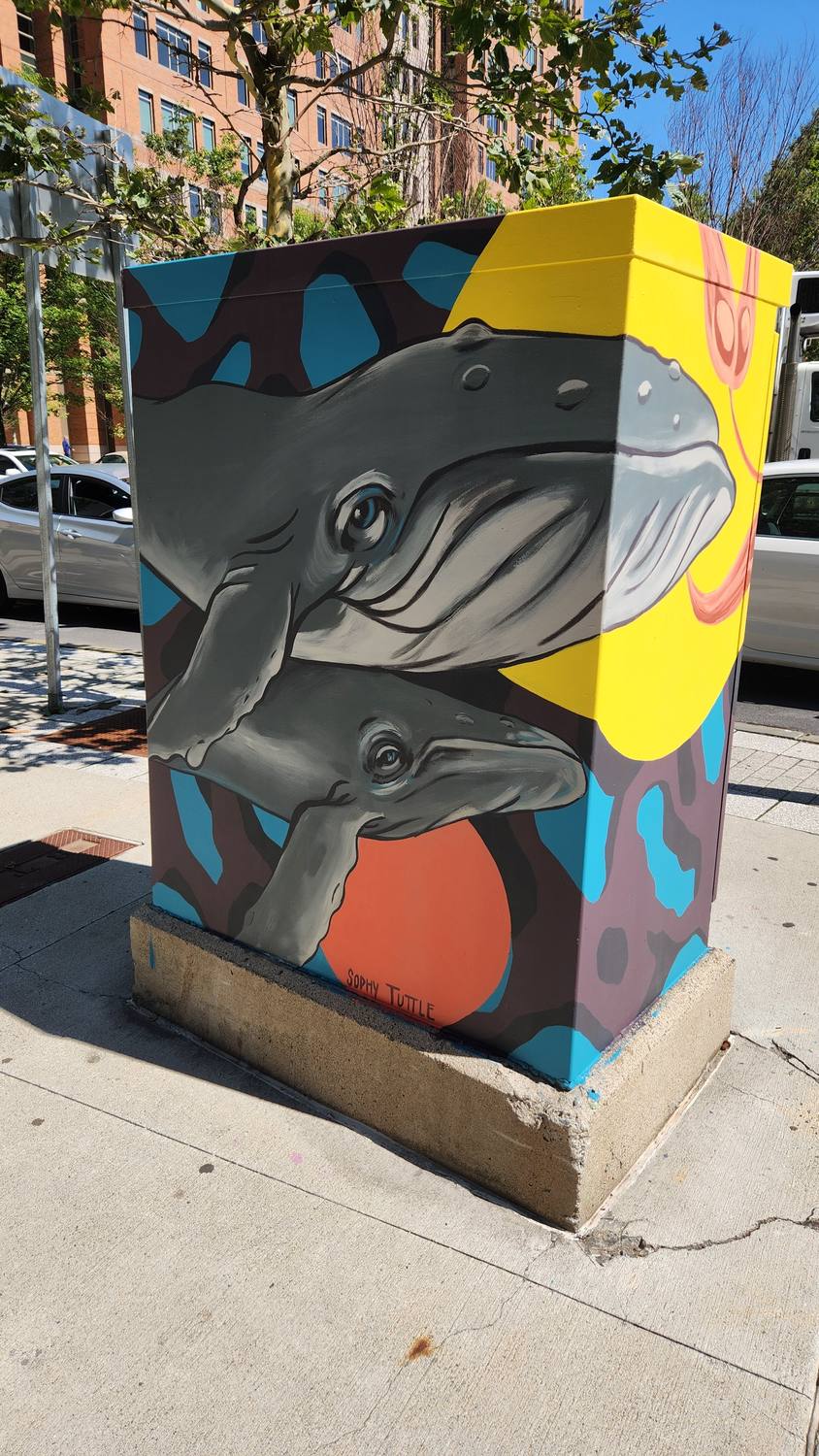
A sidewalk utility box painted with a gray humpback whale and her calf swimming across a yellow sun, over a pattern of blue, orange, and dark gray shapes.

Whale on the sidewalk

A humpback and her calf, painted on a utility box. The Seaport’s street art knows where it is.

This neighborhood started as clam flats and tidal marsh. In 1869, the state put up $5 million in bonds to help railroad companies fill it in.

Seaport quick facts
WhereSouth Boston’s waterfront, across the Fort Point Channel from downtown.
Made landAlmost all of it. Toggle the map above to 1795 and it is under water.
1Seaport and Fort Point2023 and 2025
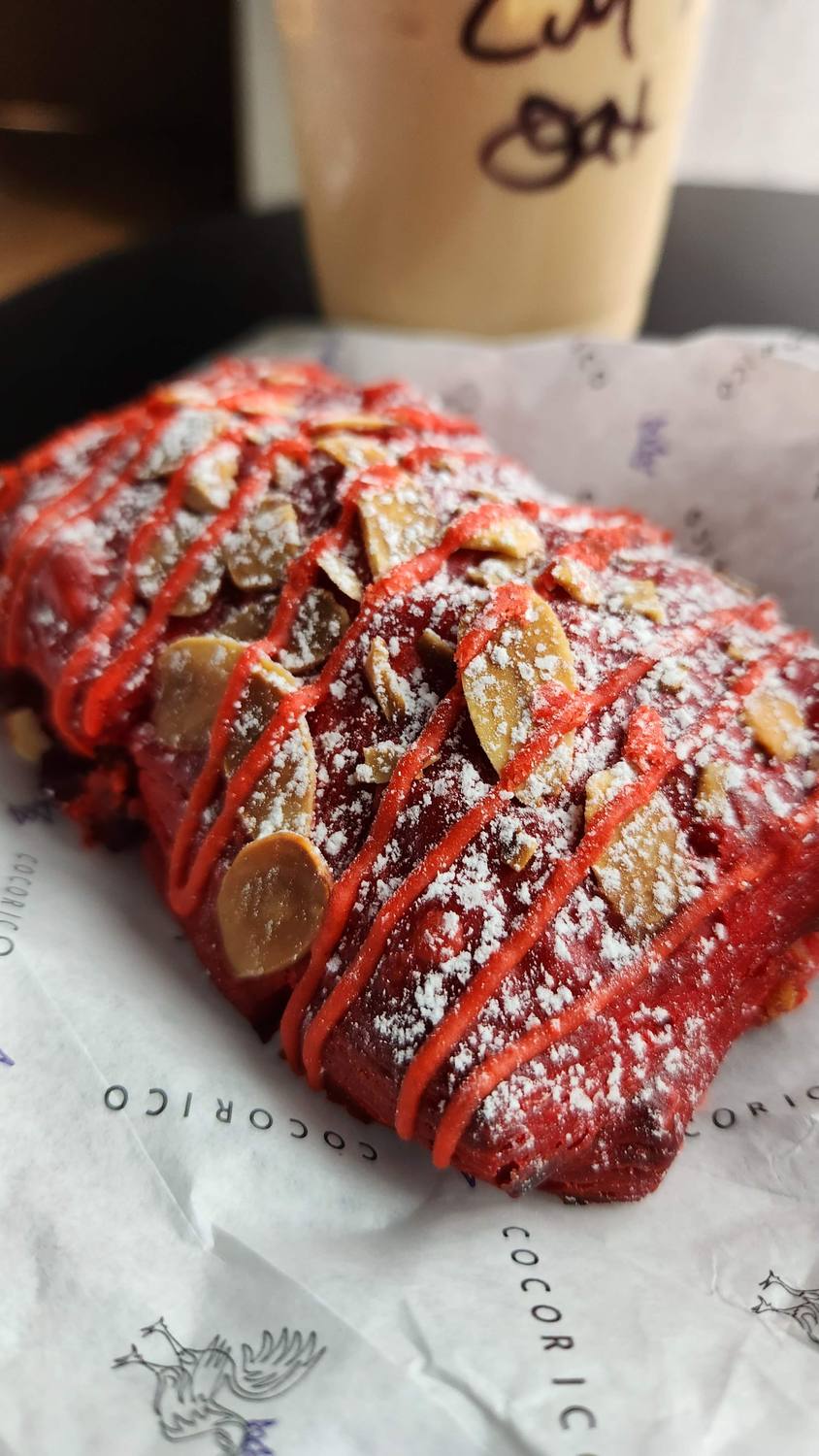
A bright red almond croissant striped with red icing and dusted with powdered sugar, on a bakery wrapper printed Cocorico, with a coffee cup behind it.
Breakfast: a red almond croissant, dusted and drizzled.
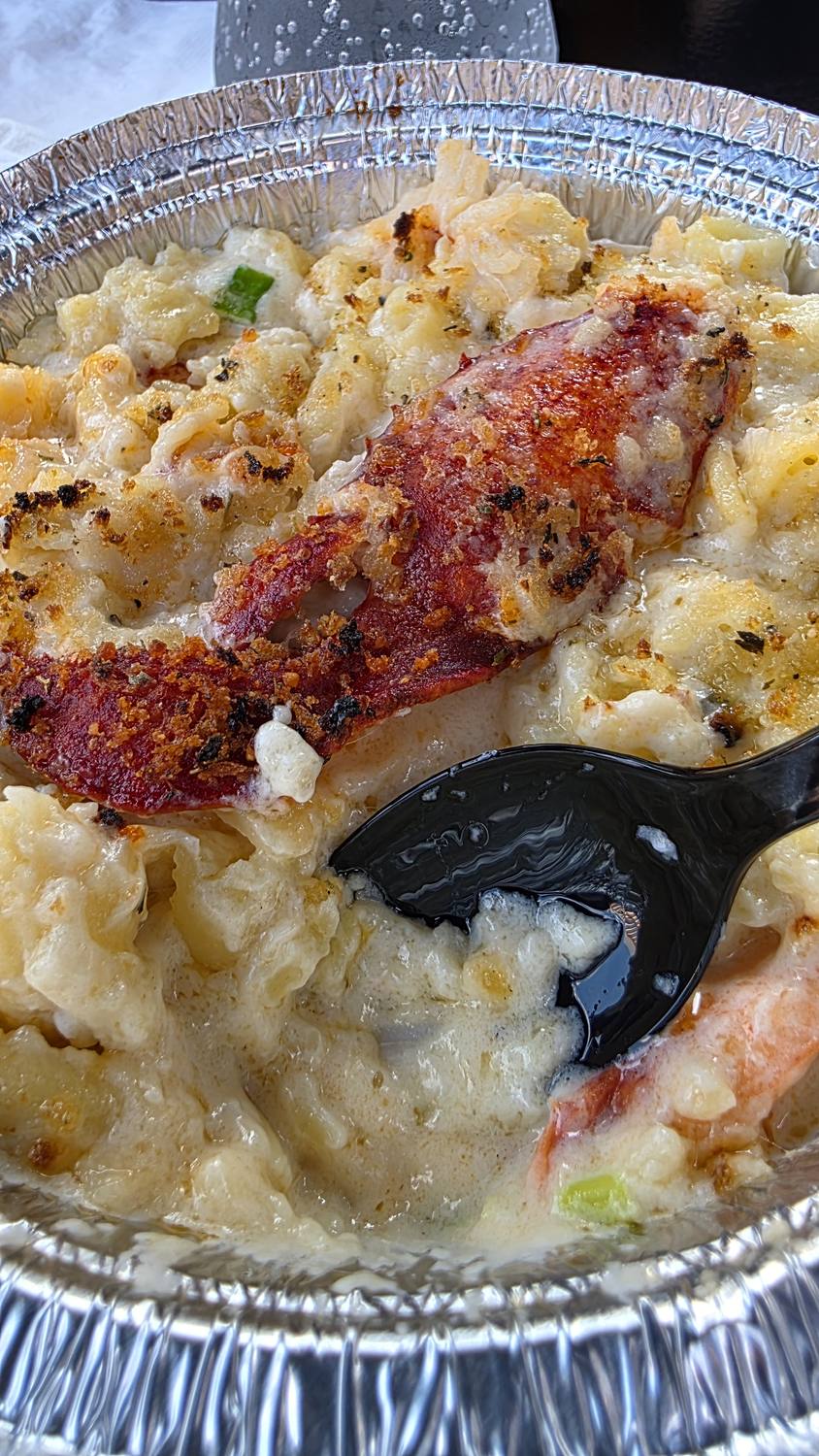
Lobster mac and cheese in a foil tin with a browned, crumb-topped crust, big pieces of lobster, and a black plastic spoon digging in.
Lobster mac and cheese at Yankee Lobster, straight out of the tin.
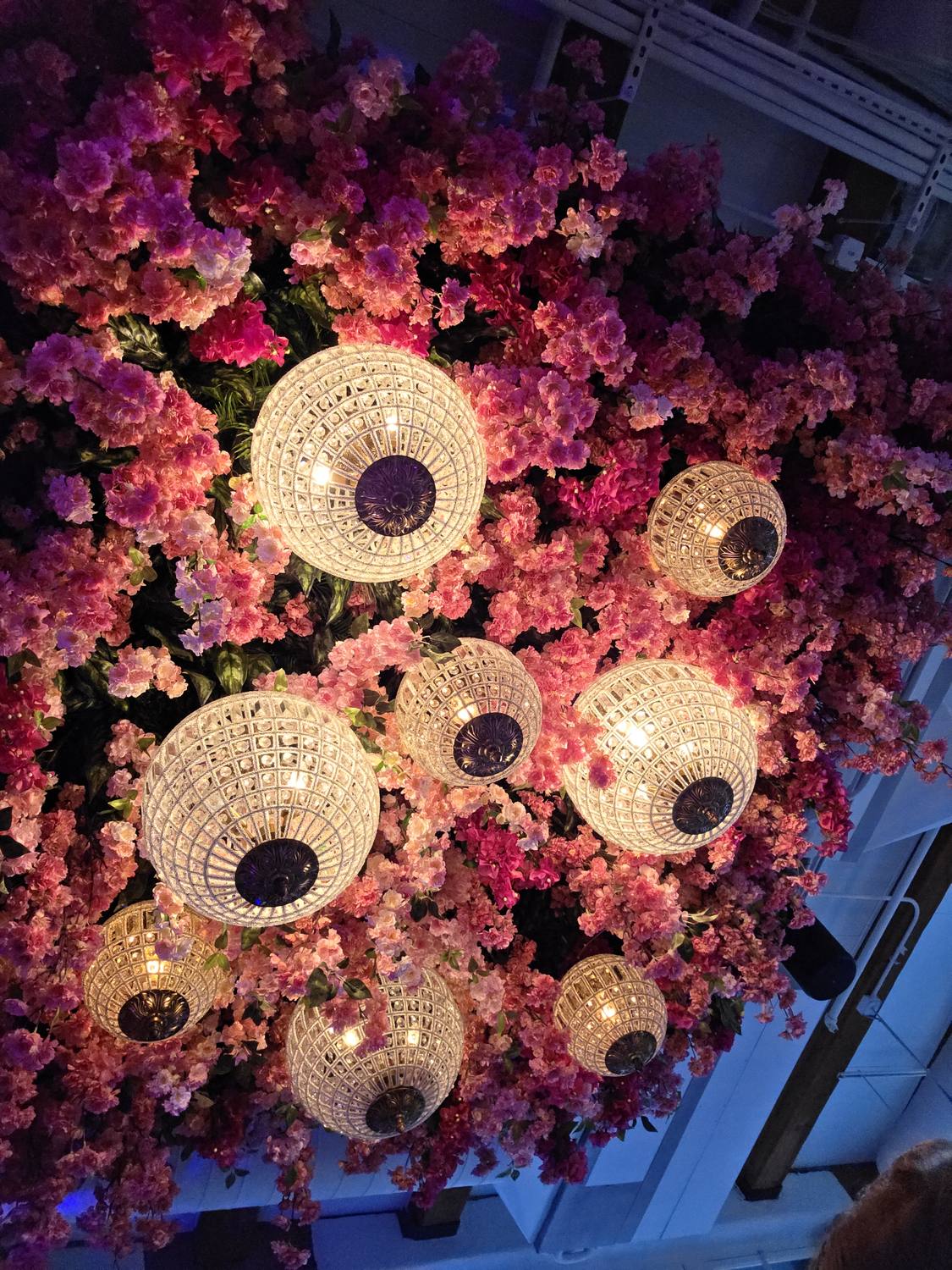
Looking up at a restaurant ceiling covered in pink and magenta flowers, with round crystal chandeliers hanging from it.
Look up at Citrus & Salt: a whole ceiling of pink flowers and crystal.
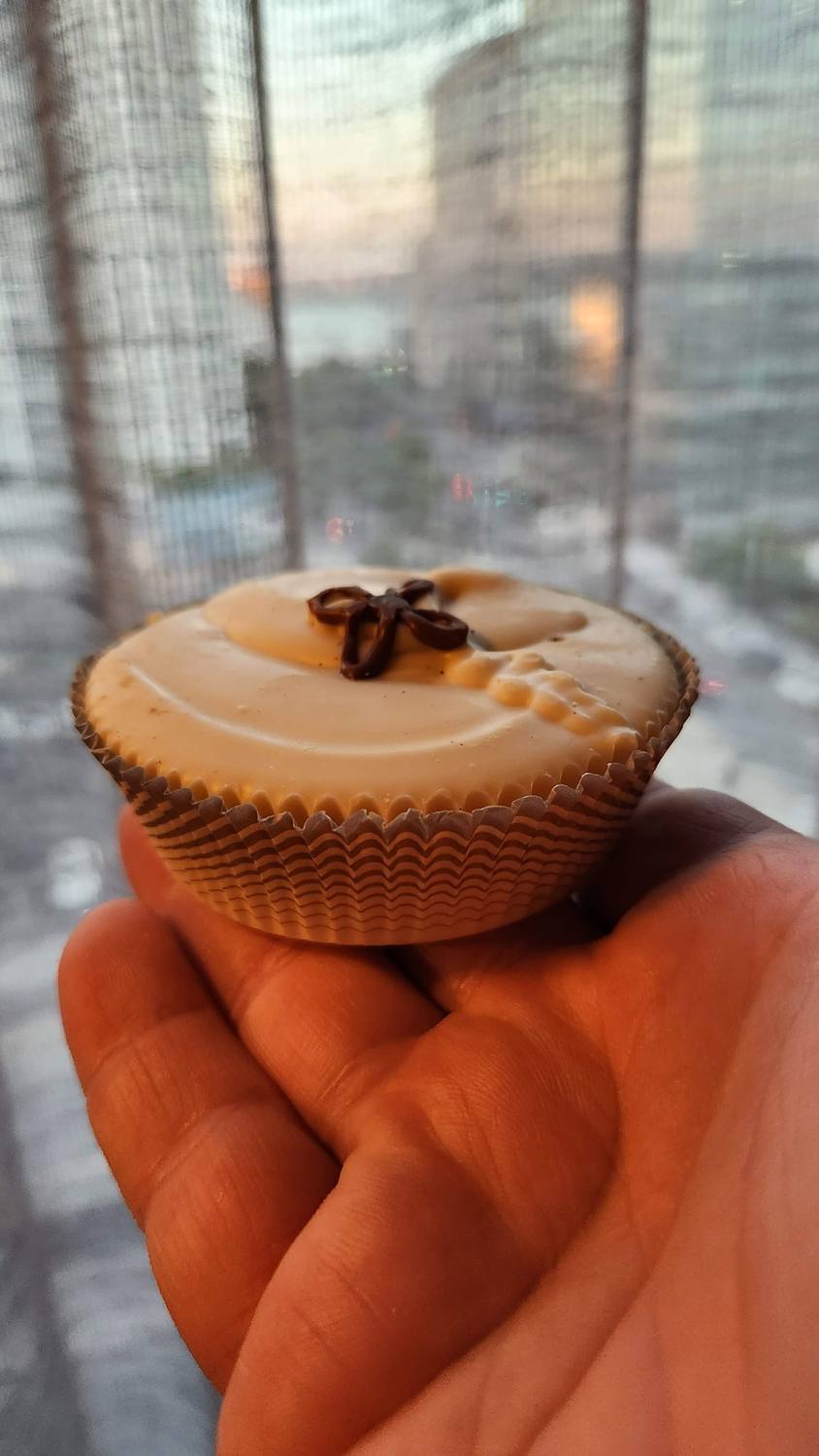
A hand holding a white chocolate candy cup topped with a small chocolate bow, in front of a blurry window view of city buildings.
Dessert, with a view out the window.
1 of 4

Seaport eats

Pastry, lobster, and a ceiling you can’t stop looking at. The Seaport eats well.

By 2017, more than $18 billion in public money had gone into the Seaport, from the harbor cleanup to the airport tunnel. The Boston Globe found a neighborhood that was 89 percent white and 3 percent Black.

From these stops
Yankee LobsterThe Zanti family started a lobster business in the North End in 1950. They opened Yankee Lobster on Northern Avenue in 2000.
Citrus & SaltChef Jason Santos’s beachy Mexican restaurant. It moved from Back Bay to Fort Point in 2024.
2Fort Point Channel2025, dusk
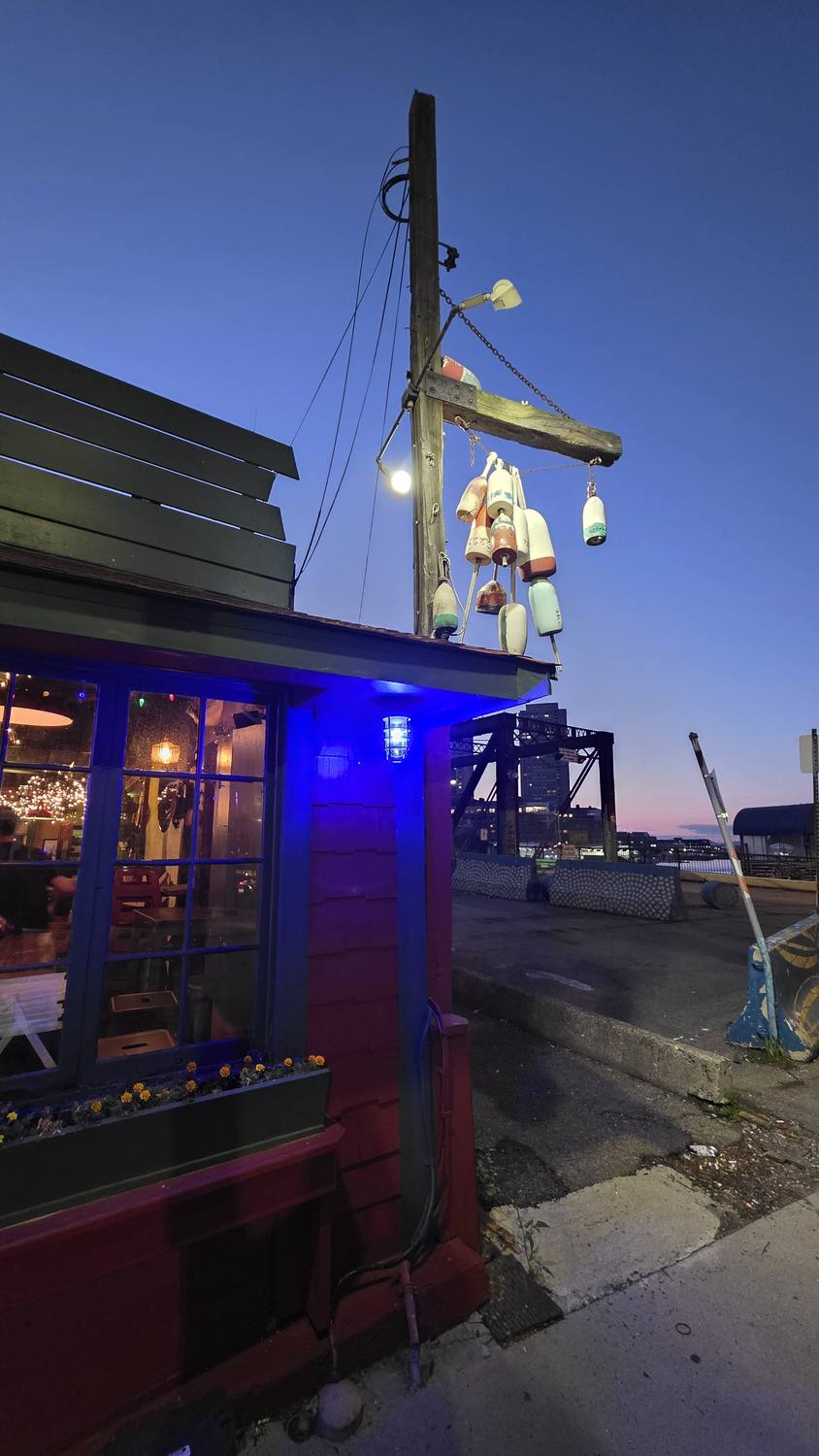
The red wooden Barking Crab restaurant at dusk, lit by a blue light, with a tall mast hung with buoys and a string of lights against a deep blue sky.

Blue hour at the Barking Crab

A red shack on the water, a mast full of buoys, and the sky going dark blue behind it.

A two-minute walk away, the Tea Party ships float in the same channel. The real Griffin’s Wharf, where the tea went over the side, is now under dry land a few blocks inland.

Fort Point Channel quick facts
The Barking CrabOpened in 1994 as an outdoor summer spot on the channel, then grew into a year-round restaurant.
Next doorThe Boston Tea Party Ships & Museum, with replica tea ships, on the Congress Street Bridge.
Griffin’s WharfStood near the foot of what is now Pearl Street, by today’s Atlantic Avenue.
2Status updateDecember 16, 1773

Why the tea went in the water 🫖

Here is the part the gift shop skips: the Tea Act did not make tea more expensive. It made legal tea cheaper.

By 1773, most of the tea Americans drank was smuggled Dutch tea, about 86 percent of it. The Tea Act let the East India Company ship straight to the colonies and cut out the middlemen, so taxed, legal tea would sell for about 2 shillings a pound, a penny under the smuggled kind. The black market was about to lose its price advantage.

The people with the most to lose were the smugglers and the merchants who hadn’t been picked to sell the Company’s tea. Wealthy smugglers such as John Hancock were among them. One of the three tea ships, the Eleanor, belonged to a Boston merchant who was himself a smuggler.

The principle was real too. Parliament kept a tax of three pence a pound, and the colonists had no vote in Parliament. Historians still argue about the mix of principle and profit. Both were on the wharf that night.

Boston’s merchants didn’t give up on tea. Within a generation, firms like Perkins & Company were paying for it by smuggling opium into China, which had banned it. Those fortunes helped build the Perkins School for the Blind, Massachusetts General Hospital, and the Boston Athenaeum.

The Tea Party by the numbers
The meeting5,000 to 7,000 people crowded into Old South Meeting House, about a third of the town. The usual property rules for town meetings were dropped, so laborers, sailors, and apprentices were in the room.
The shipsDartmouth, Eleanor, and Beaver.
The tea340 chests (342 in the old newspaper count), 92,616 pounds, valued by the East India Company at £9,659.
How longAbout three hours. A padlock broken along the way was replaced.
The disguisesA few men dressed as Mohawks. Most didn’t bother.
The billParliament closed the port of Boston in 1774.
Taxation without a vote, again. In 1898, the same country annexed Hawaiʻi over the petitions of more than 21,000 Hawaiians. See the history on the Big Island trip.
3Central Burying Ground, Boston Common2018, afternoon
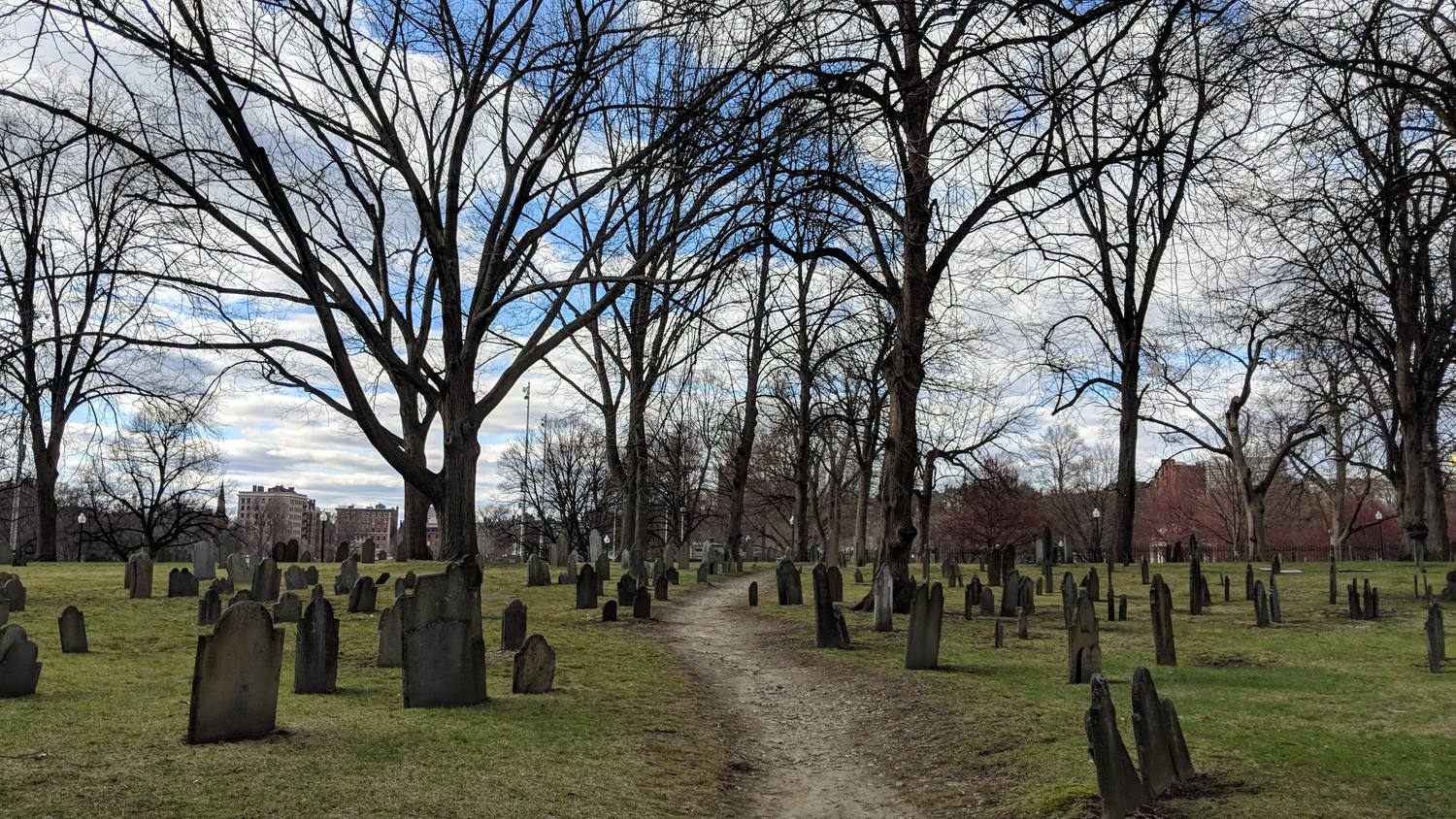
Rows of old slate headstones in green grass under tall bare trees, with a dirt path running through the middle and brick buildings beyond.

Slate and bare trees

Early spring on the Common, before the leaves, when you can see every headstone.

Samuel Sprague, one of the men who dumped the tea, is buried here. So are British soldiers who died during the occupation of Boston that followed.

Central Burying Ground quick facts
Opened1756, on the Boylston Street side of Boston Common.
Also hereGilbert Stuart, who painted the portrait of George Washington on the one-dollar bill, and William Billings, who wrote the Revolutionary hymn “Chester.”
4The Liberty Tree siteWashington and Essex Streets

The tree that isn’t there 🌳

No photo for this one. There hasn’t been a tree to photograph since 1775.

It was a big elm on Orange Street, now Washington Street, planted around 1646. On August 14, 1765, Bostonians woke up to find an effigy of Andrew Oliver, the man picked to collect the new stamp tax, hanging from it. By December, Oliver had resigned, reportedly under the same tree. When the Stamp Act was repealed, people hung a copper sign on it that said Liberty Tree, and 150 lanterns.

It stayed the place to protest. In November 1773, crowds gathered here to demand that the tea consignees resign in public. Two of them were the governor’s sons. In 1775, during the occupation, British soldiers cut the tree down for firewood. It made 14 cords.

Town meeting had property rules for who could vote. The tree didn’t. Anyone could stand under it.

The Liberty Tree today
The markerA carved plaque from 1850, on the building at the corner of Washington and Essex Streets.
The plazaLiberty Tree Plaza opened on the spot in 2018. Pipes and wires underground mean a new tree can’t be planted there.
5Marshall Street and the Union Oyster House2023, evening
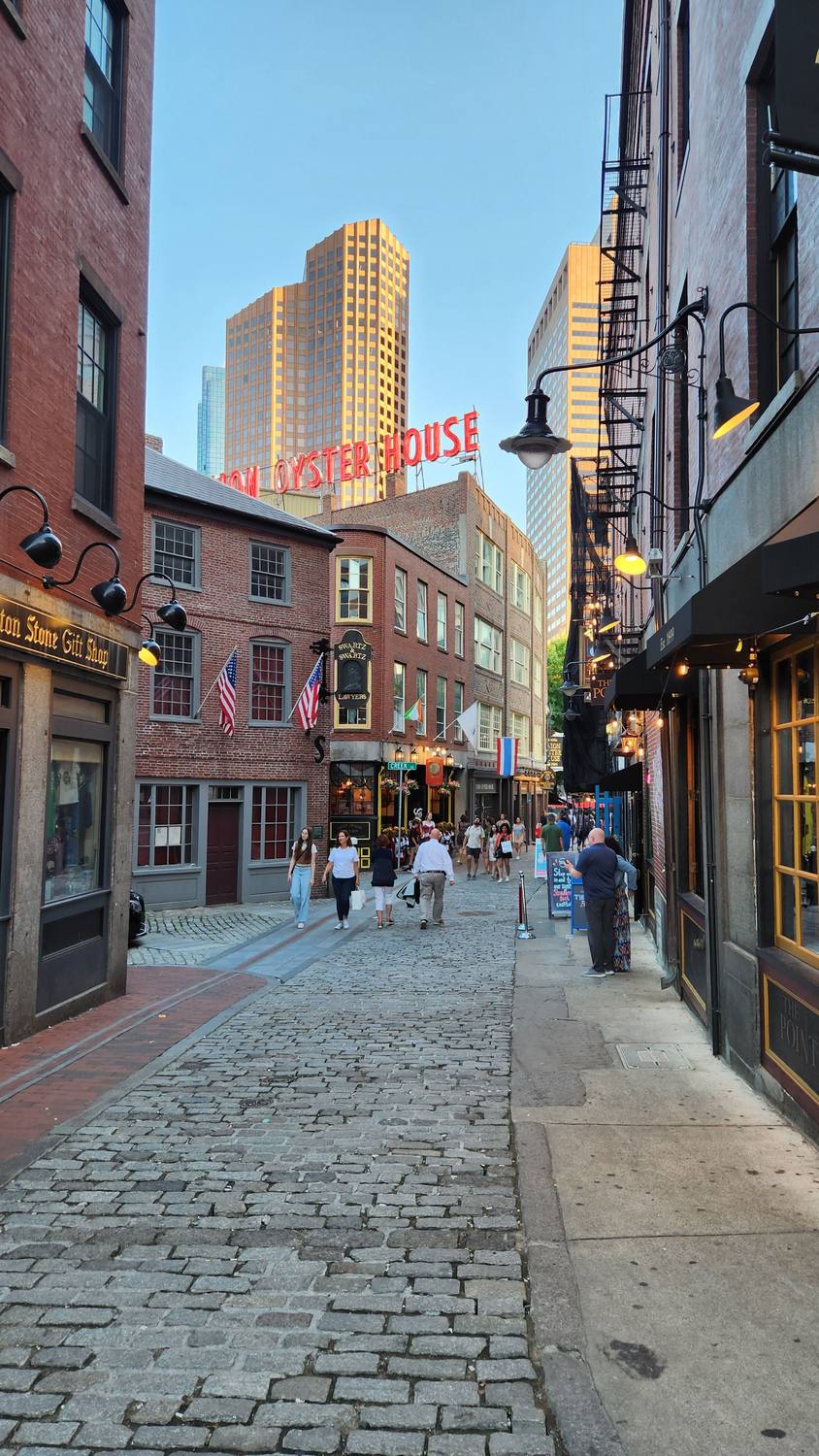
A narrow cobblestone lane between old brick buildings with gas-style lamps and American flags, leading to a red Union Oyster House sign, with modern towers rising behind it in evening light.

Cobblestones and a red sign

Old brick, cobblestones, and a neon oyster house sign, with the glass towers of downtown stacked up behind.

During the Revolution, Ebenezer Hancock paid the Continental Army out of this building. His brother John is the one with the famous signature, and the one whose sloop was seized for smuggling in 1768.

Union Oyster House quick facts
The buildingFinished around 1716.
The restaurantServing since October 7, 1826, the oldest continuously operating restaurant known in the country. It turns 200 on October 7, 2026.
UpstairsIsaiah Thomas printed his newspaper, the Massachusetts Spy, here in 1771. In 1796 the future King Louis Philippe of France lived upstairs in exile and taught French.
RegularsDaniel Webster, known for putting away at least six plates of oysters.
6Copley Square2023, night
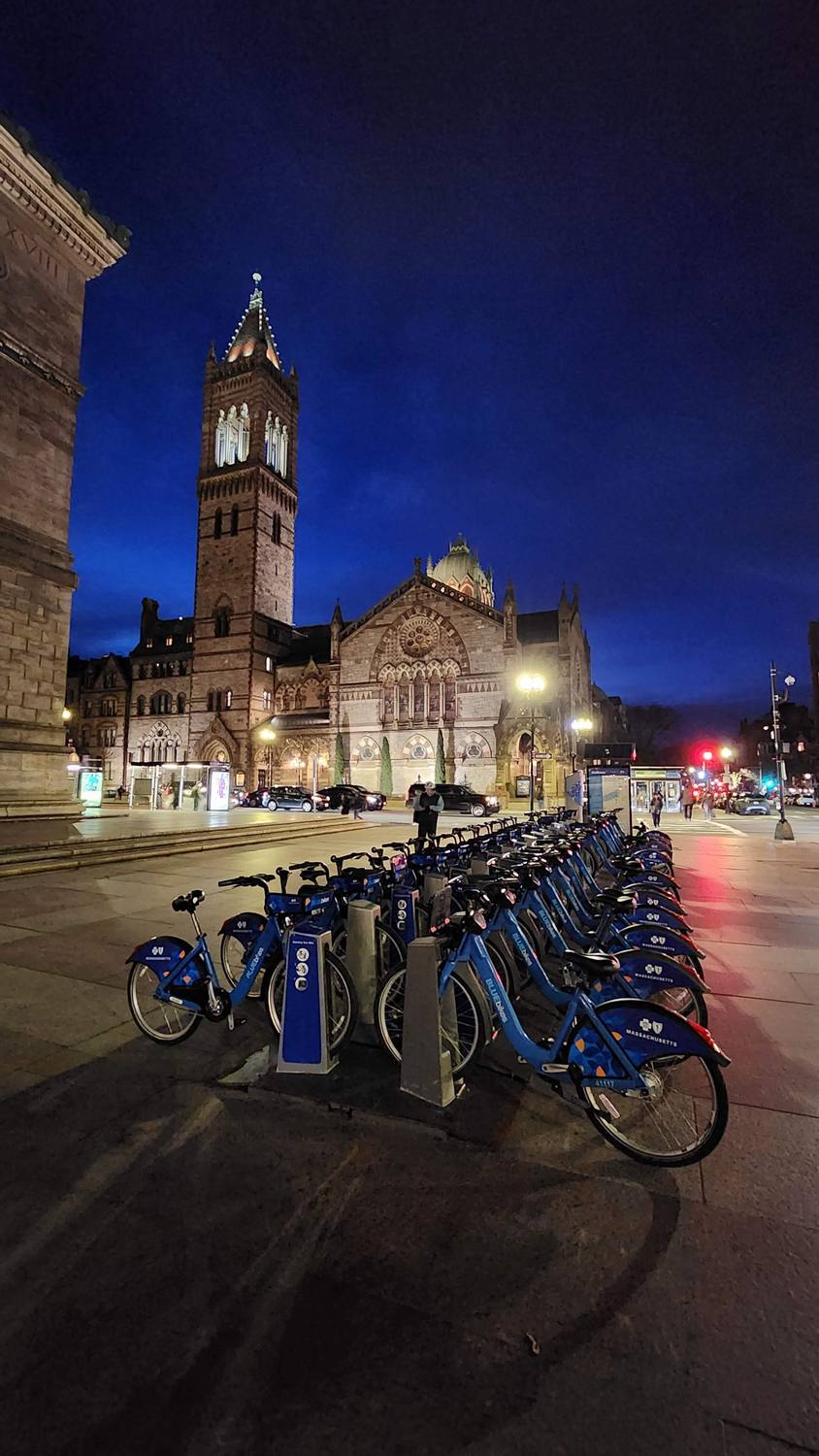
Copley Square at night: a row of blue rental bikes in a docking station in the foreground, and the tall stone bell tower of Old South Church lit against a deep blue sky.

Blue hour, blue bikes

Old South Church’s bell tower lit up over Boylston Street, and a row of Bluebikes waiting for morning.

Phillis Wheatley belonged to this congregation. In September 1773, her book of poems came out in London while she was still enslaved in Boston. She was freed that fall, a few weeks before the tea went in the harbor.

Old South Church quick facts
The congregationFounded in 1669. It met at Old South Meeting House, where the Tea Party meeting was held, and moved here in 1875.
The groundFreshly filled land. In 1773 this spot was part of the Back Bay.
The tower246 feet tall.
Its treasureOne of eleven surviving first editions of the Bay Psalm Book, printed in 1640, the first book printed in what became the United States.
6Boston Public Library2023, midday
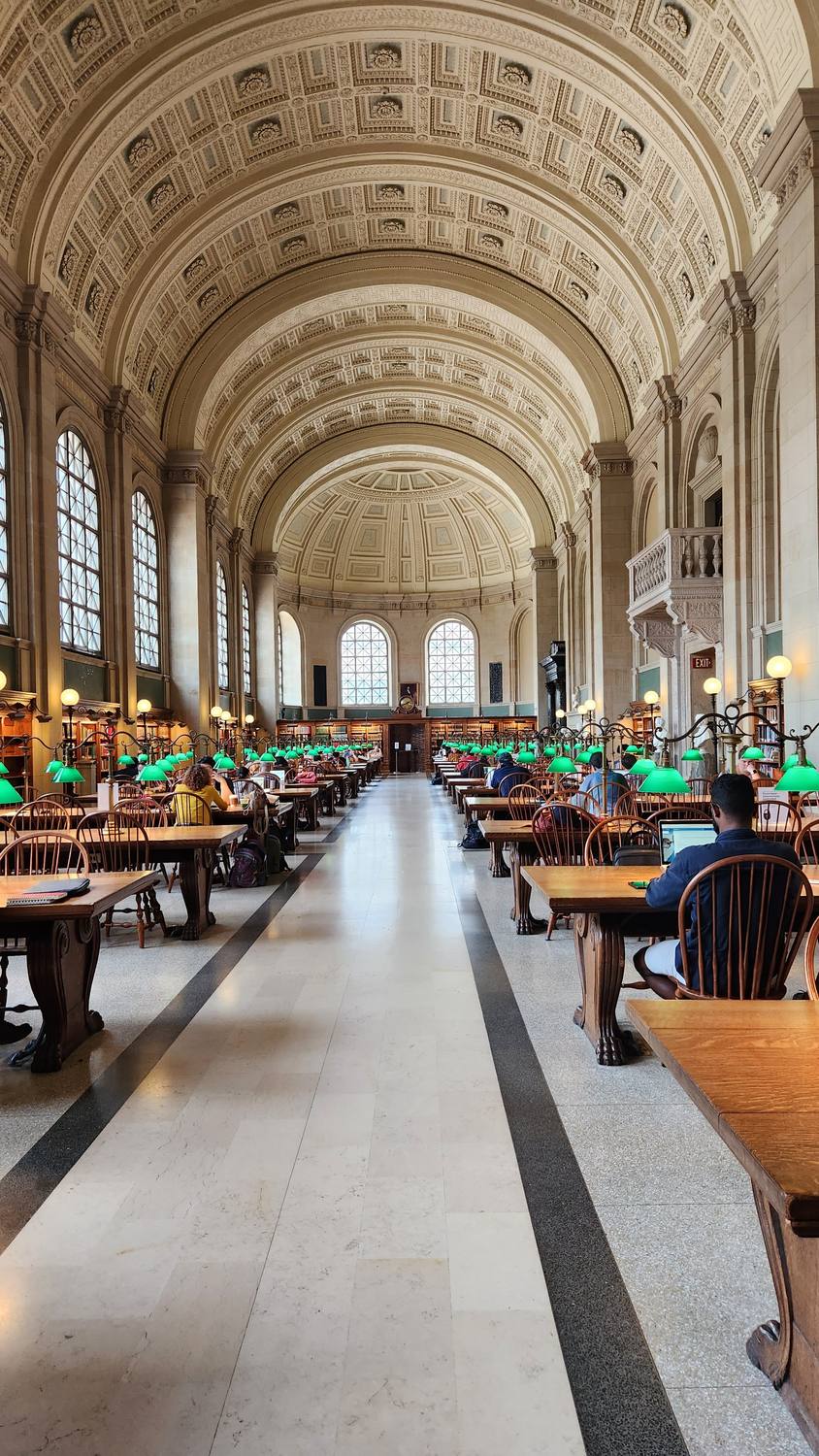
Bates Hall, a long reading room with a coffered barrel-vaulted ceiling, arched windows, and rows of wooden tables with green reading lamps, with people reading.

Green lamps, all the way down

Bates Hall: a barrel-vaulted reading room with a whole runway of green lamps. You can walk in and sit down.

Carved over the front door: FREE TO ALL. The money that started the library came from Joshua Bates, a Massachusetts-born banker in London, who asked for exactly that.

Boston Public Library quick facts
Founded1848, the first large free municipal library in the United States. It opened in 1854 in a former schoolhouse.
This buildingDesigned by Charles Follen McKim and opened in 1895. McKim called it a “palace for the people.”
The nameBates Hall honors Joshua Bates, who gave $50,000 in 1852 and $50,000 more for books.
6Boston Public LibraryA few minutes later
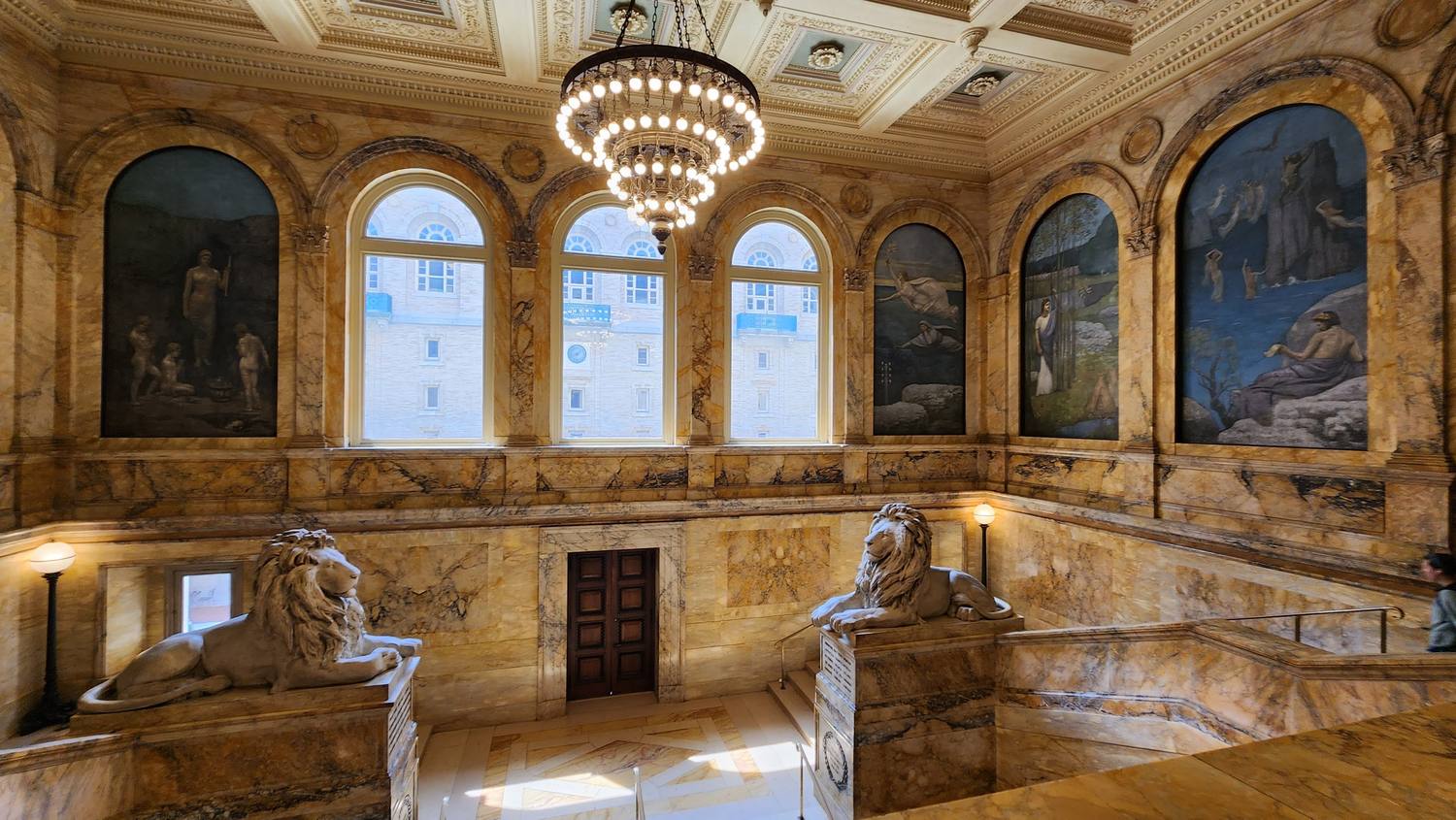
The library's grand staircase of golden marble, with two marble lions on pedestals, a crystal chandelier, arched windows, and large pale blue murals on the walls.

Two lions on the stairs

Golden marble, a chandelier, murals, and a pair of lions keeping watch on the landing.

The lions are a war memorial. They honor the 2nd and 20th Massachusetts, two Union regiments from the Civil War.

The grand staircase
The lionsBy Louis Saint-Gaudens, left unpolished. Veterans of the two regiments liked them that way.
The muralsPierre Puvis de Chavannes, The Muses of Inspiration Hail the Spirit, the Harbinger of Light. His only murals on display outside France.
6Outside the library2023, midday
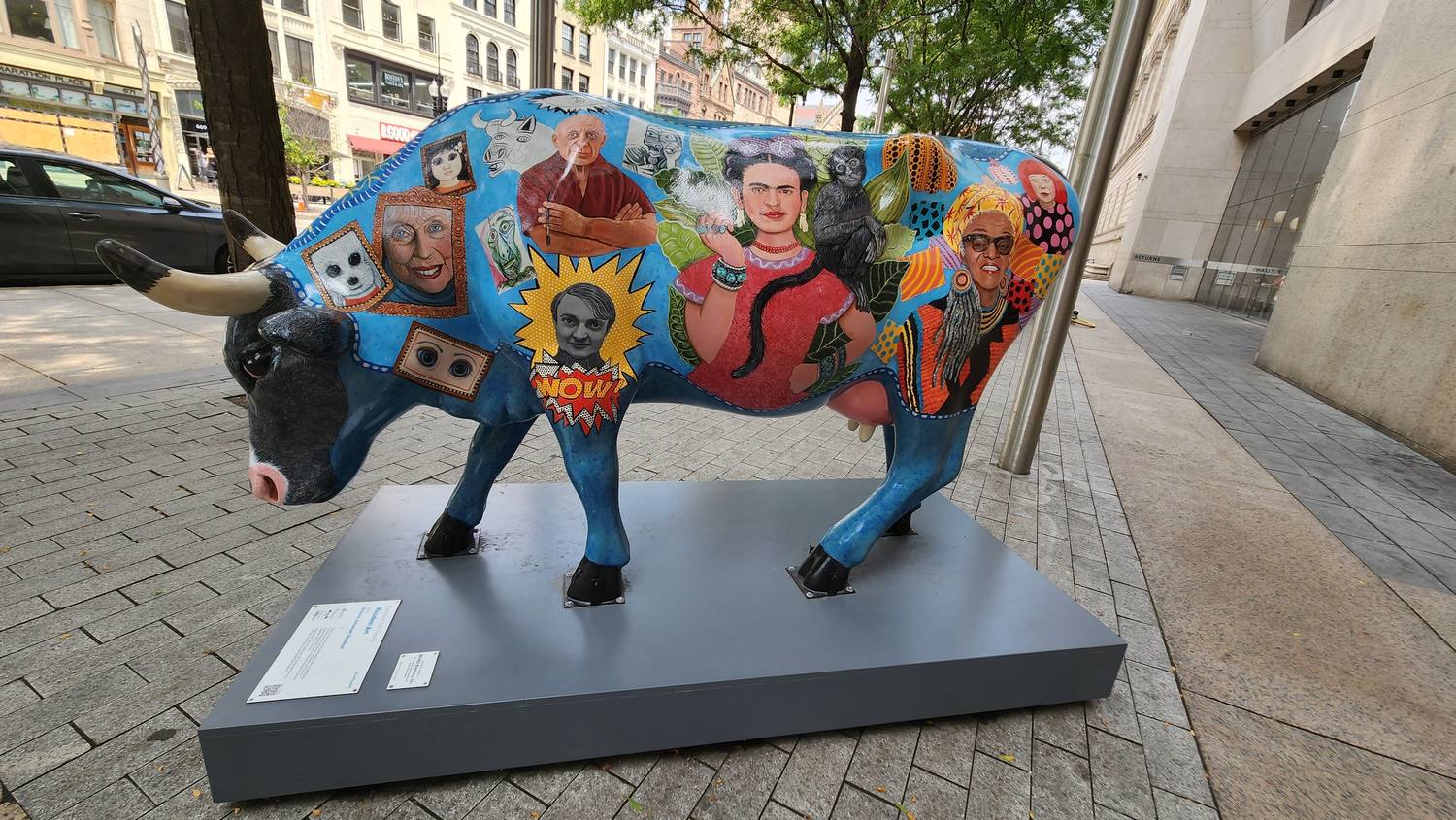
A life-size fiberglass cow painted blue and covered in portraits of artists, including Pablo Picasso, Frida Kahlo with a monkey, and Yayoi Kusama in polka dots, standing on a gray base on a brick sidewalk.

Moo-dern art

Picasso, Frida Kahlo, and Yayoi Kusama, all riding on one cow outside the library.

About this cow
The titleMoodern Art, by Barbara Johansen Newman, a cow full of her favorite artists of the last hundred years.
The herdCowParade New England, 2023: 75 painted cows around Boston for the 75th anniversary of the Jimmy Fund, which raises money for cancer care at Dana-Farber.
Where they wentThe cows were sold or auctioned off at the end of the summer.
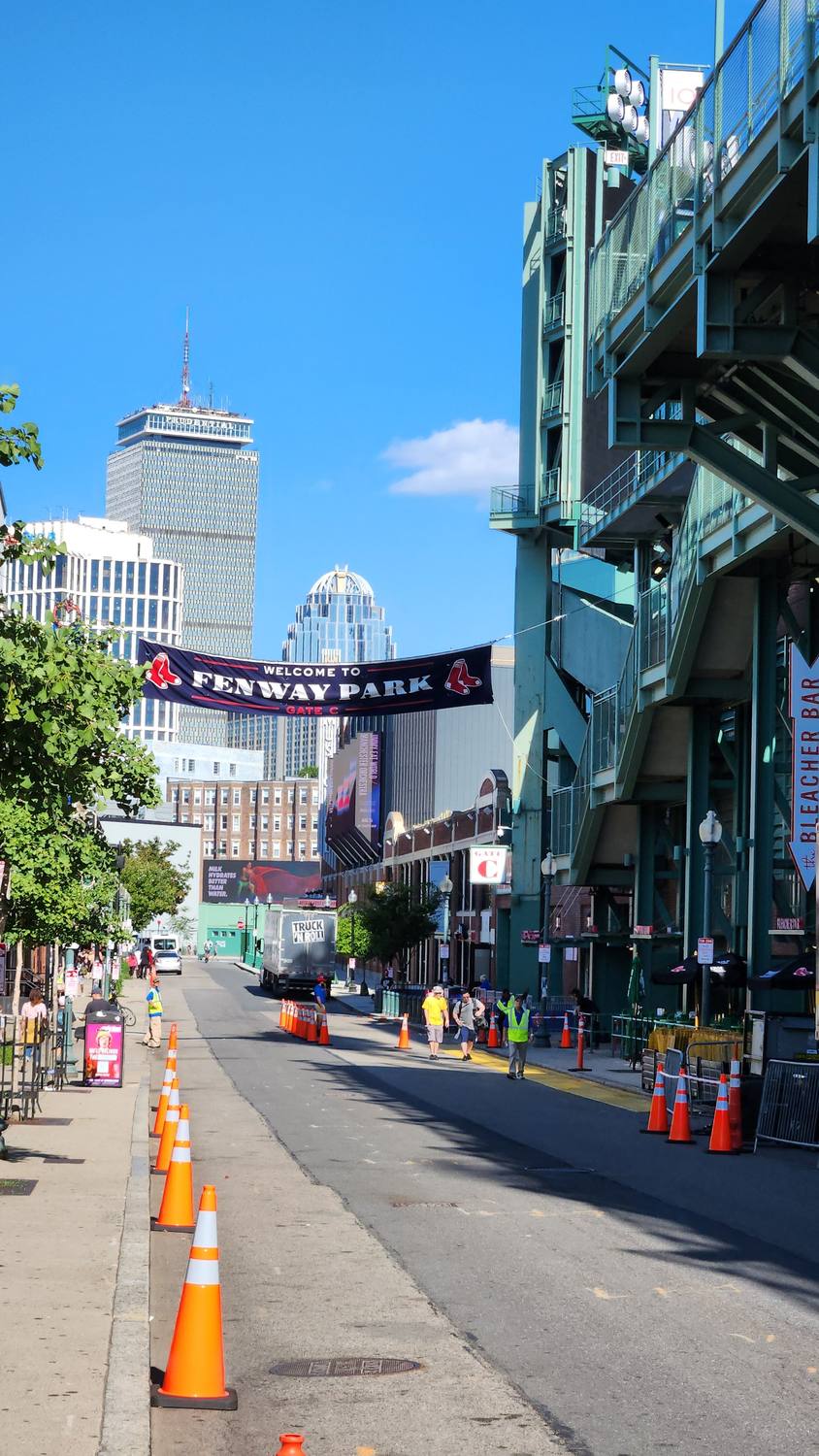
7Fenway Park2023, afternoon
Jersey Street beside Fenway Park's green steel facade, with a Welcome to Fenway Park banner over the street, orange traffic cones, and the Prudential Tower rising in the distance under a blue sky.

Welcome to Fenway Park

Green steel, a welcome banner, and the Pru standing over the ballpark on a clear summer afternoon.

Until 2018, this was Yawkey Way, named for the owner whose Red Sox tried out Jackie Robinson here in 1945 and signed no one. In 1959 they became the last major league team to put a Black player on the field.

Fenway Park quick facts
OpenedApril 20, 1912. It is the oldest ballpark in the majors still in use.
The groundThe Fenway neighborhood was made in the late 1800s by filling in marsh, the Fens.
The Green MonsterThe left field wall, about 37 feet tall, painted green in 1947.
The firstPumpsie Green, the first Black player for the Red Sox, debuted on July 21, 1959.
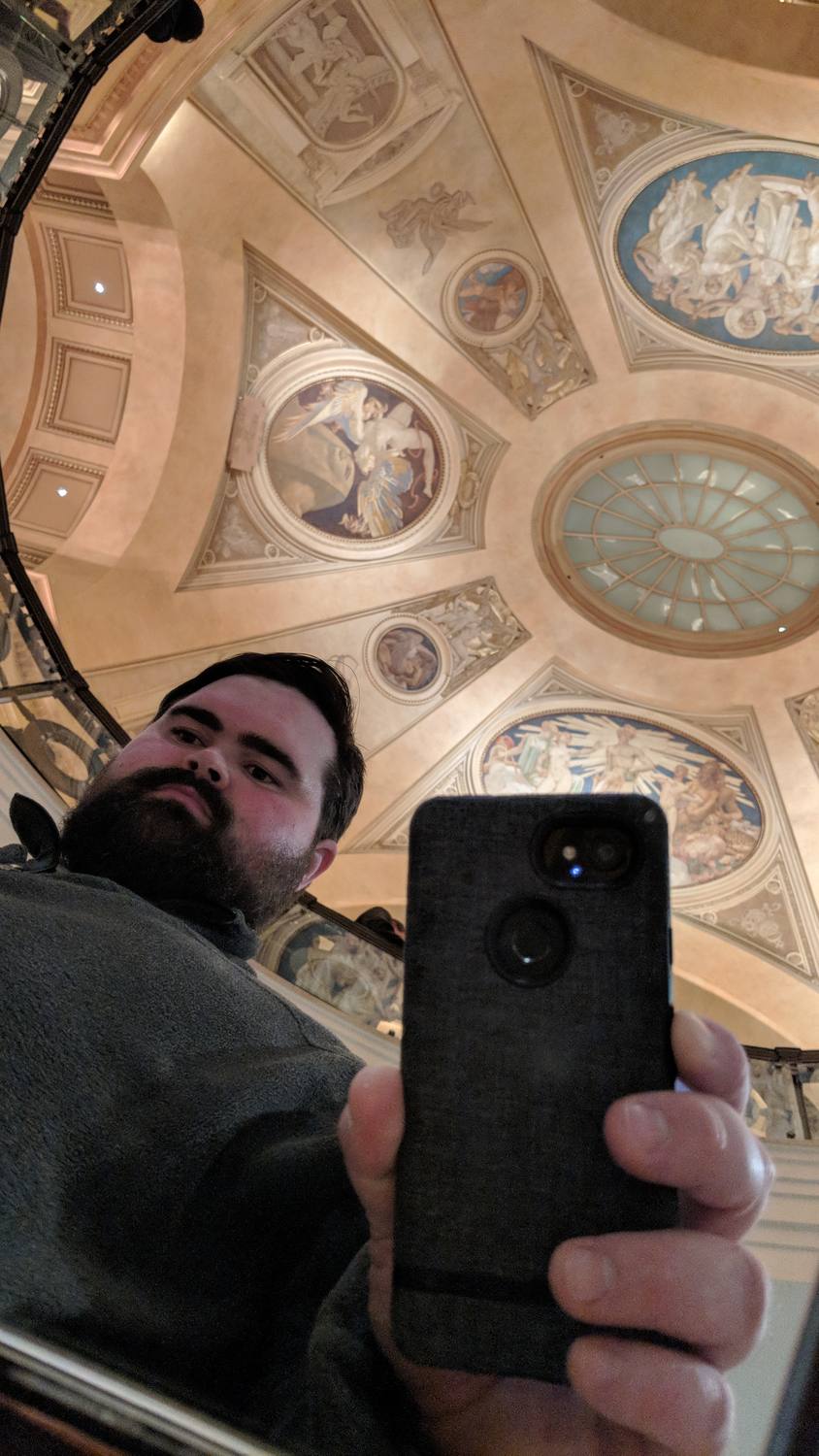
8Museum of Fine Arts2018, evening
Joe, bearded, taking a selfie in a mirrored surface while holding up his phone, under the MFA rotunda's painted ceiling of round and arched murals framed in cream and gold.

Me and Sargent

A mirror selfie under John Singer Sargent’s painted ceiling in the MFA rotunda.

Sargent painted Isabella Stewart Gardner in 1888. The portrait set Boston gossiping, and her husband asked her not to show it in public again while he was alive. It hung in a gallery she kept private.

The rotunda quick facts
The muralsPainted by Sargent from 1916 to 1925. The rotunda was unveiled in 1921, and the last pieces went up after his death.
The buildingThe MFA moved here, to Huntington Avenue, in 1909.
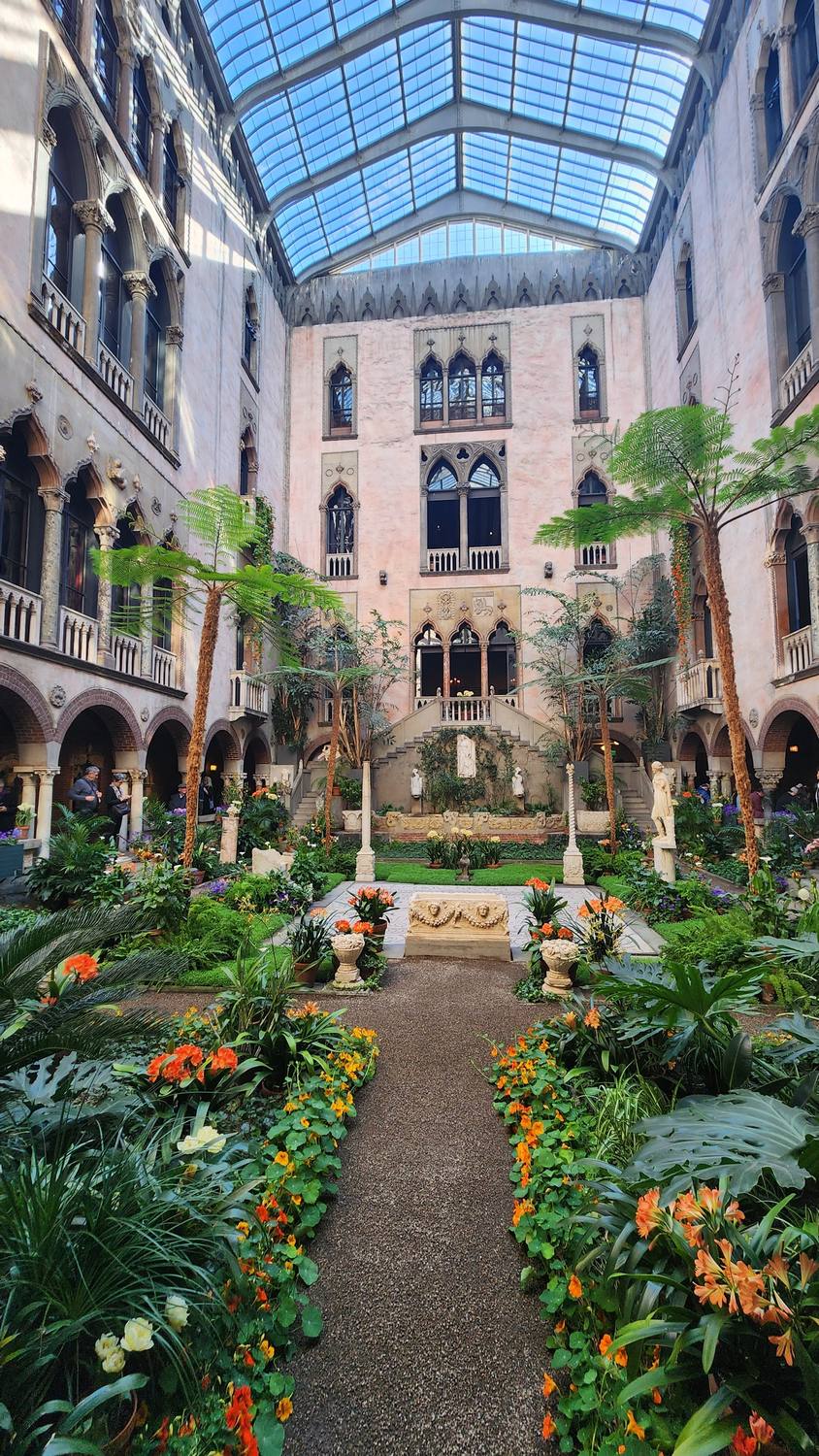
9Isabella Stewart Gardner Museum2023, afternoon
The Gardner Museum's glass-roofed courtyard, built like a Venetian palace, with pink walls, arched windows and balconies, tree ferns, statues, and beds of orange and purple flowers. Long orange nasturtium vines hang from balconies on both sides.

The nasturtiums are in

A Venetian palace courtyard under a glass roof, in full spring bloom. Look at the balconies on both sides: those long orange ribbons are the hanging nasturtiums.

The hanging nasturtiums
The traditionIsabella Stewart Gardner started it, to celebrate her birthday on April 14.
How long it takesAbout nine months. The vines start from seed in June and are trained in the museum’s greenhouses all winter.
How long they getUp to about 20 feet. The longest has hung around 25.
When to goThey hang for about three weeks, from late March into April.
The museumOpened in 1903, with the collection arranged by Gardner herself.
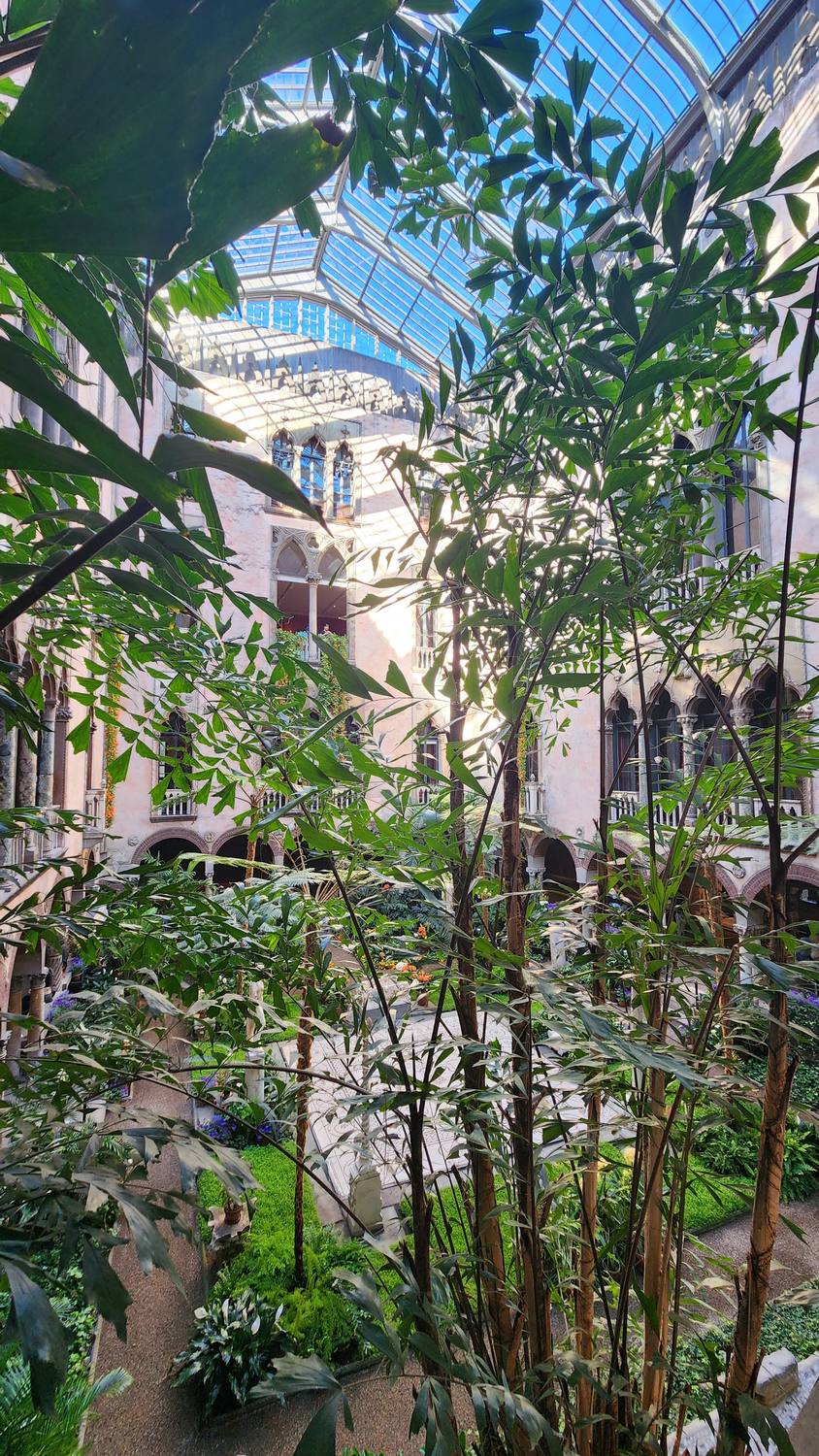
9Isabella Stewart Gardner MuseumA few minutes later, upstairs
Looking down into the Gardner courtyard from an upper floor through tall, leafy plants, with sunlight pouring through the glass roof onto pink arched walls.

A jungle under glass

From the upper galleries, the courtyard disappears behind leaves and sunlight.

At 1:24 in the morning on March 18, 1990, two men dressed as police officers were let in by the night guards. They stayed 81 minutes and left with 13 works. Nobody has been charged, and none of the art has come back.

The Gardner theft
What was takenVermeer’s The Concert, three works by Rembrandt, including his only seascape, Manet’s Chez Tortoni, five drawings by Degas, a work by Govert Flinck, a Chinese bronze beaker, and a bronze eagle that once topped a Napoleonic flagpole.
WorthThe FBI has estimated $200 million to $600 million. The Concert alone has been valued at about $250 million.
The reward$10 million, from the museum, for information that leads to the art.
Why the frames are emptyGardner’s will says the collection can’t be significantly changed. The frames stay on the walls, waiting.
9The Dutch RoomEmpty since 1990
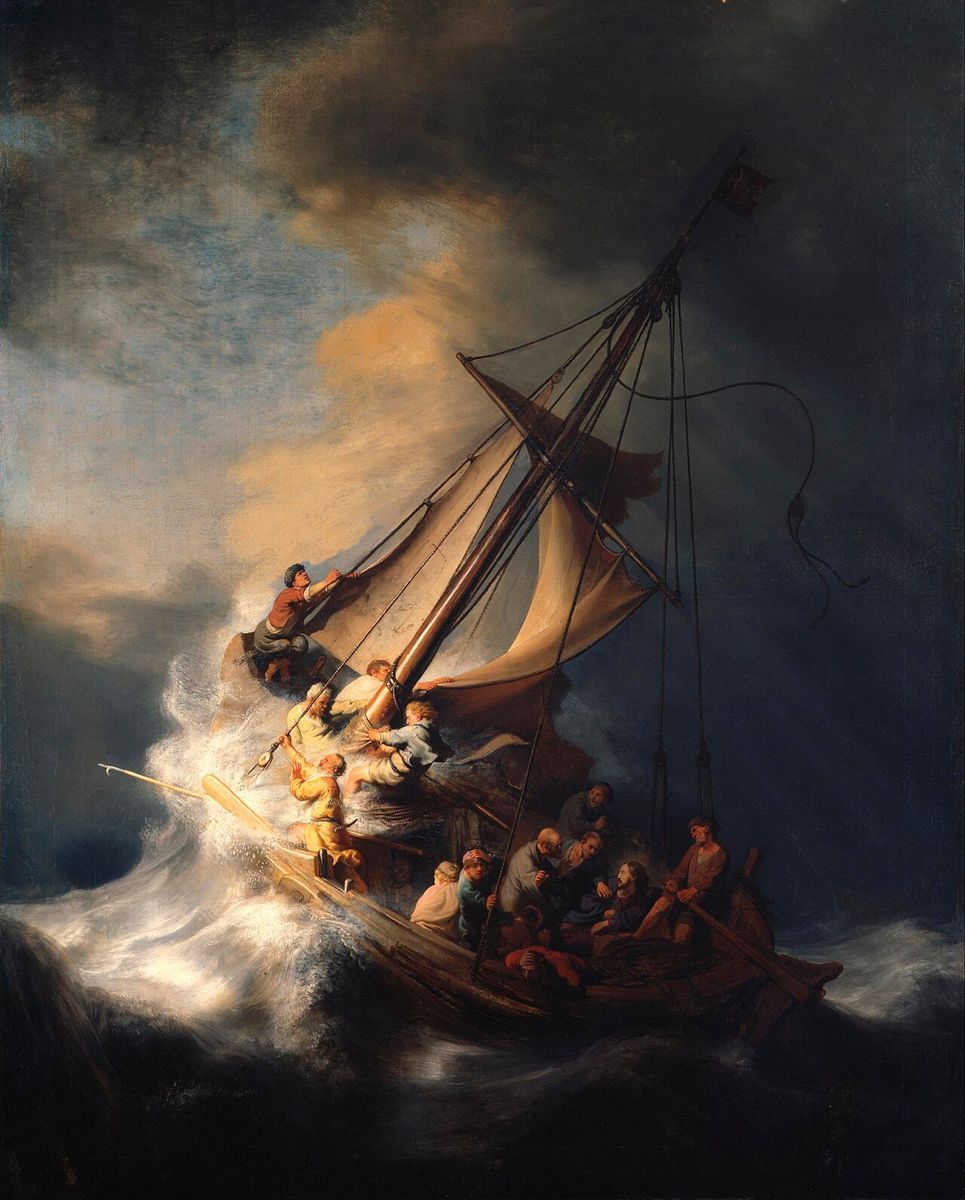
Rembrandt's Christ in the Storm on the Sea of Galilee: a small fishing boat heeling over on a huge dark wave, its sail torn, disciples struggling with ropes while Christ sits calmly in the stern, with light breaking through storm clouds above.Rembrandt, 1633. Public domain, via Wikimedia Commons.

Christ in the Storm on the Sea of Galilee

This is one of my favorite paintings in all of art history. A tiny boat, a wall of water, and light breaking through right where it needs to. It would be lovely to see it in person one day. Right now there’s only the frame.

It is Rembrandt’s only known seascape. He painted himself into the boat: the one man looking straight out at you. The thieves cut the canvas out of its frame.

The painting
Painted1633, oil on canvas, about 5 feet tall.
BoughtFor Isabella Stewart Gardner in 1898, through the art historian Bernard Berenson, for $6,000.
Where it hungThe Dutch Room, on the museum’s second floor.
Seen it?Call the museum’s tip line, listed on its theft page. The reward still stands.
Helpful linksGo deeper
Sources

Where the facts came from

  1. Wikipedia: Tea Act
  2. Wikipedia: Boston Tea Party
  3. Massachusetts Historical Society: Coming of the American Revolution, the Boston Tea Party
  4. Encyclopedia.com: Boston Tea Party (1773)
  5. Commonwealth Museum: Road to Revolution, the Body of the People
  6. Boston Tea Party Ships & Museum: The Body of the People
  7. Wikipedia: Liberty Affair
  8. Boston Public Library research guide: 1768, the Liberty Affair
  9. Revolutionary Spaces: The Liberty Tree
  10. Massachusetts Historical Society: The 259th anniversary of Boston’s Liberty Tree
  11. Wikipedia: Liberty Tree
  12. MHS History Source: Opium Smugglers, Boston’s Merchants and the China Trade, 1790 to 1850
  13. NPS: Deer Island
  14. Wikipedia: Praying town
  15. Wikipedia: Shawmut Peninsula
  16. Wikipedia: Phillis Wheatley
  17. Wikipedia: Old South Church
  18. Wikipedia: Central Burying Ground
  19. Wikipedia: Union Oyster House
  20. Boston.com: Union Oyster House turns 200
  21. Wikipedia: Back Bay
  22. Leventhal Map & Education Center: Where the Water Was
  23. Boston Historic Shoreline GIS layer (ArcGIS Online), 1795 and 1995 shorelines used for the map
  24. Boston Globe Spotlight: A brand new Boston, even whiter than the old (2017)
  25. Yankee Lobster Company: About
  26. Boston Magazine: Citrus & Salt relocates to the Seaport
  27. The Barking Crab: History
  28. Wikipedia: Congress Street Bridge
  29. Boston Public Library: BPL History
  30. Wikipedia: Boston Public Library, McKim Building
  31. WBUR: The history behind the lion sculptures at the Boston Public Library
  32. Boston Public Library: Central Library points of interest
  33. Dana-Farber Impact: CowParade New England mooves the needle
  34. BOStoday: Why 75 colorful cows are moving around Boston
  35. Wikipedia: Fenway Park
  36. SABR: Jackie Robinson in 1945, from Boston tryout to Negro Leagues star
  37. SABR: July 21, 1959, Pumpsie Green makes his debut
  38. NPR: Yawkey Way renamed (2018)
  39. Museum of Fine Arts: Ties that bind, Boston and John Singer Sargent
  40. Wikipedia: Museum of Fine Arts, Boston
  41. Gardner Museum: The story behind Sargent’s portrait of Isabella Stewart Gardner
  42. New England Historical Society: John Singer Sargent and Isabella Stewart Gardner
  43. Gardner Museum: Hanging Nasturtiums
  44. WBUR: What it takes to grow the Gardner Museum’s nasturtiums
  45. Wikipedia: Isabella Stewart Gardner
  46. Wikipedia: Isabella Stewart Gardner Museum theft
  47. Wikipedia: The Storm on the Sea of Galilee
  48. Wikimedia Commons: Rembrandt, Christ in the Storm on the Lake of Galilee (public domain image)
  49. Wikipedia: Kūʻē Petitions

Details checked September 2026. Hours, exhibits, and the nasturtium dates change every year, so check with each place before you go.

More trips »
See the portfolio »