My Garden
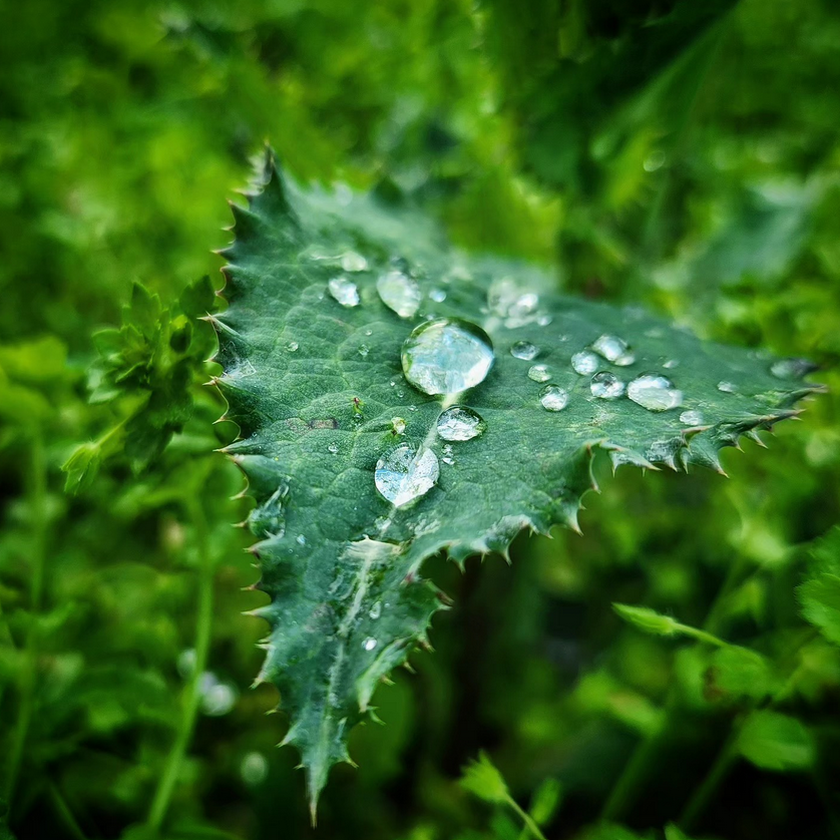
After a morning shower in my garden, the thistle stopped looking like a weed and started looking engineered. The spines, serrated edges, and fine surface hairs held the rain in place. Each droplet kept its own round boundary, bright enough to feel temporary, heavy enough to pull the leaf into a different kind of attention.
The photograph is small by design. No horizon, no wider garden, no weather rolling across the frame. Just water sitting on a defensive plant, and the wet smell rising from the soil around it.
That after-rain smell is petrichorPetrichorThe earthy scent often noticed when rain falls on dry ground, named in the 1960s and tied to plant oils, soil chemistry, and microbial compounds such as geosmin.. It is easy to treat it as a mood, but it is also physical. Rain strikes soil and leaf litter. Pores open. Tiny aerosols lift. Compounds that were quiet in dry weather become part of the air.
Rain does not only change how the garden looks. It changes how the garden announces itself.
That is what this frame keeps pointing toward: a garden is not only color and form. It has friction, smell, adhesion, decay, defense, and weather. The thistle is doing what thistles do. The rain is doing what rain does. For a few minutes, the two make something more delicate than either one seems built for.
GeosminGeosminA volatile compound associated with the earthy smell of soil, beets, and rain after a dry spell. is one of the big characters in that story. It is produced by several organisms, including soil bacteria in the genus Streptomyces. When rain arrives, especially after a dry stretch, that earthy smell can come up fast enough to feel like memory before science catches up.
In this image, petrichor is not visible, but it is part of the scene. The droplets show the rain staying on the leaf. The scent tells you the rest of the garden has woken up too. That is the value of leaning close: the photograph can only show the water, but the viewer can almost supply the smell.