Mojave Anchor
A lone Joshua tree holds its place in the Mojave, its branching form and high desert silhouette turning survival into composition.
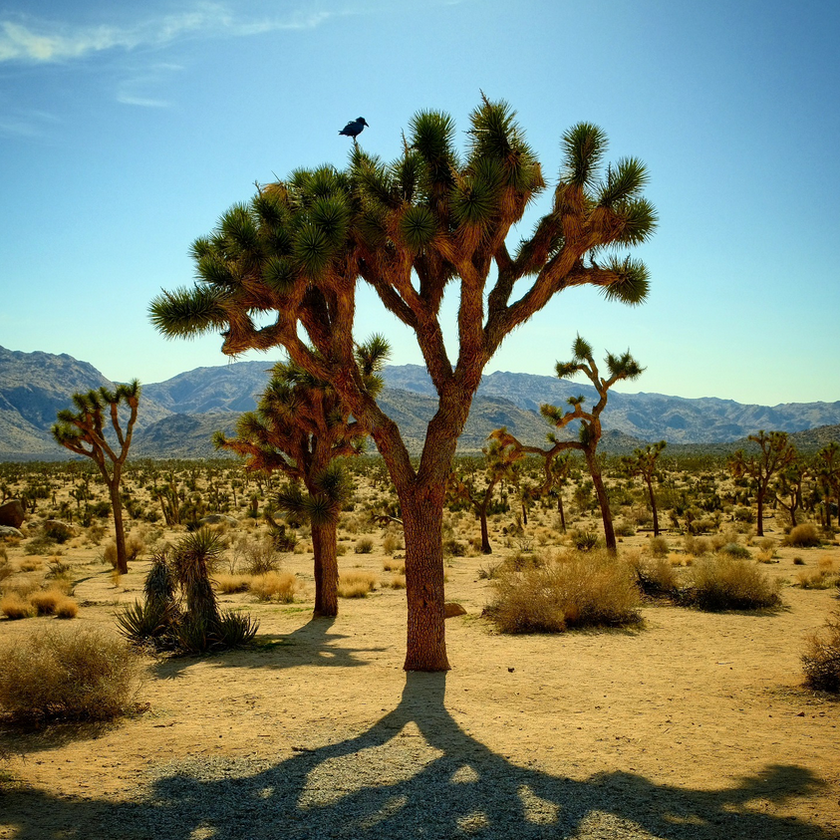
Joshua Tree National Park · California
March 21, 2025
A lone Joshua tree holds its place in the Mojave, its branching form and high desert silhouette turning survival into composition.
A lone Joshua treeJoshua treeYucca brevifolia, the namesake plant of Joshua Tree National Park and one of the defining forms of the Mojave Desert. stands in the hard California light, all angles and persistence. Its trunk does not offer the easy grace of an oak or pine. It twists, forks, and reaches in a way that feels earned. Near the crown, a desert raven holds the high point of the frame, turning the tree from subject into perch, marker, and lookout.
This is the kind of scene that can disappear if you rush it. The desert gives you very little cover: bright sky, pale ground, rough plants, and shadows that get sharp fast. The photograph needed a clean read. Tree, bird, sky, space. Nothing extra.
The Mojave DesertMojave DesertThe higher, cooler desert of the American Southwest, where Joshua trees are one of the clearest visual indicators of place. is not empty country. It is selective country. Joshua trees grow slowly, often only a few inches a year, and their branching patterns tell part of their history. A heavily branched tree usually has survived enough seasons, blooms, freezes, droughts, and wind to become more architecture than plant.
Botanically, the Joshua tree is not a true tree in the ordinary sense. It is a giant monocotMonocotA major group of flowering plants that includes grasses, orchids, palms, agaves, and Joshua trees., related more closely to agaves than to hardwood trees. Its flowers are tied to the yucca mothYucca mothA pollinating moth whose life cycle is closely linked with yucca plants, including Joshua trees., one of those desert partnerships that sounds improbable until you spend time in a place where every advantage matters.
What I like about this frame is the restraint. The bird gives scale. The tree gives character. The open sky gives the subject room to stand there without apology. The desert did not hand me a complicated scene. It handed me a clear one, and the job was not to clutter it up.
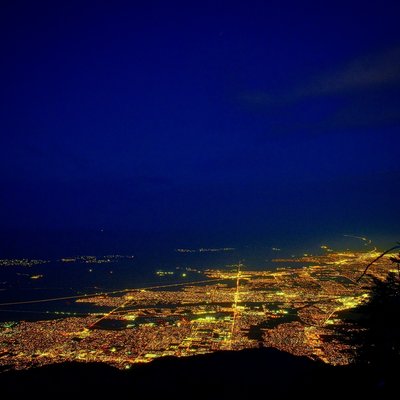 Desert overlookDesert GridThe same basin seen from above at twilight, where human pattern replaces the plant life.
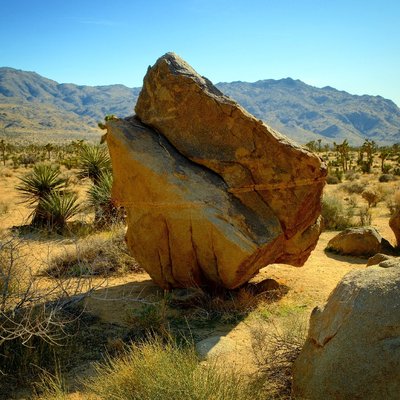 Desert geologyQuartz Monzogranite MonolithThe ancient boulders that share the park with this tree, shaped by the same long desert time.
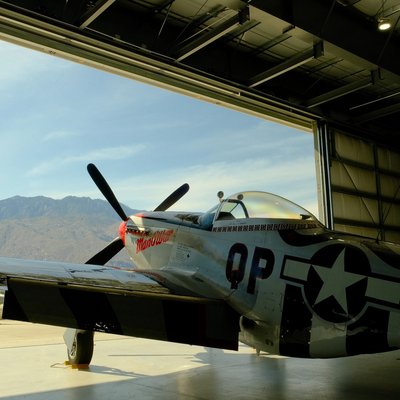 Palm SpringsThe Warbird’s ShadowA Coachella Valley companion built from metal and history rather than root and bark.