Quartz Monzogranite Monolith
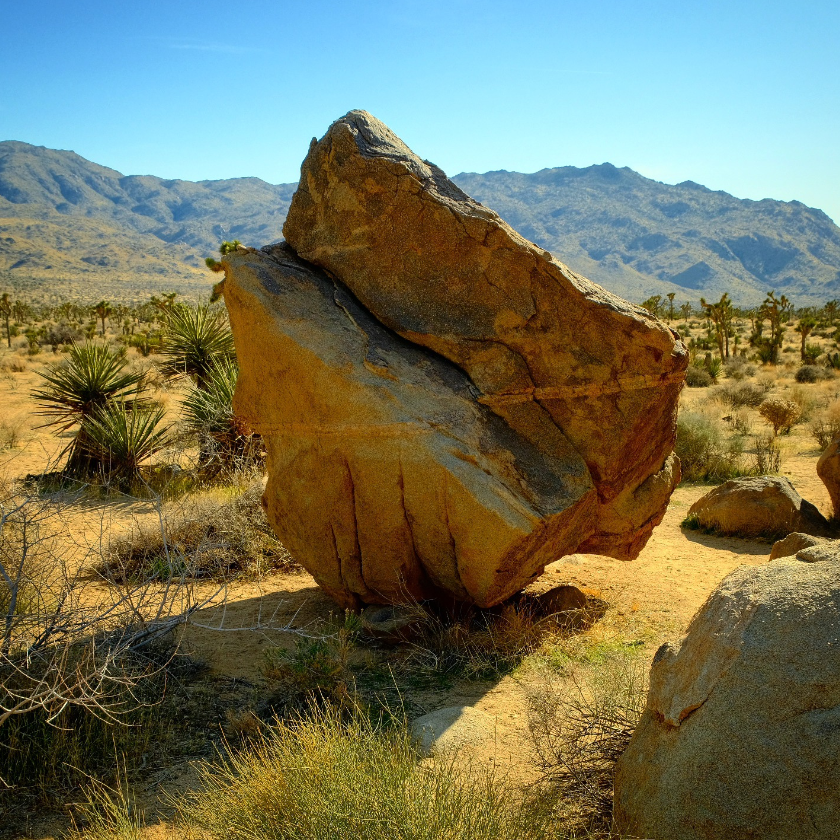
A massive desert boulder holds the frame in Joshua Tree, where fractured monzogranite, sun, wind, and time give stone the presence of architecture.
Joshua Tree National Park · California
March 21, 2025
A massive desert boulder holds the frame in Joshua Tree, where fractured monzogranite, sun, wind, and time give stone the presence of architecture.
The rock does not pose, but it has presence. In the open country of Joshua Tree National ParkJoshua Tree National ParkA Southern California park where the Mojave and Colorado deserts meet, known for Joshua trees, boulder fields, desert plants, and wide sky., this mass of pale stone rises out of the scrub like something built, then abandoned, then softened by time. The shape is simple from a distance. Up close, it is all seams, rounded edges, stains, and fractures.
This is the park’s other signature form. The Joshua trees give the place its name, but the boulders give it weight. They change the pace of the landscape. A tree reaches and gestures. A rock like this holds. The photograph needed to respect that difference: less drama, more gravity.
The formation is quartz monzograniteQuartz monzograniteA coarse-grained igneous rock common in Joshua Tree’s boulder country, formed from magma that cooled slowly underground., part of the deep geologic structure that gives Joshua Tree its unmistakable boulder fields. Long before this was a desert scene, molten rock cooled underground. Cracks formed in the stone. Water worked into those joints. Erosion eventually uncovered the blocks and rounded their harder edges.
That process, called spheroidal weatheringSpheroidal weatheringA weathering process that rounds the corners and edges of blocky rock, giving boulders their softened, stacked appearance., is why these rocks can look both massive and worn, architectural and organic. The vertical fissures still show the old block structure, but the surface has been eased by weather, heat, cold, and water moving through the stone at a pace human beings are not built to notice.
The surrounding desert scrub matters too. Creosote, yucca, and low brush keep the boulder from becoming an abstract object. They return it to scale. What I like about this frame is that it does not try to make the rock heroic. It lets the stone be what it is: big, quiet, sun-struck, and older than any hurry I brought with me.
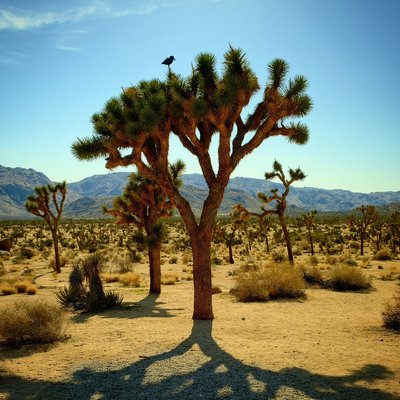 Desert plantMojave AnchorThe living counterpart to this stone, rooted in the same desert and shaped by the same long time.
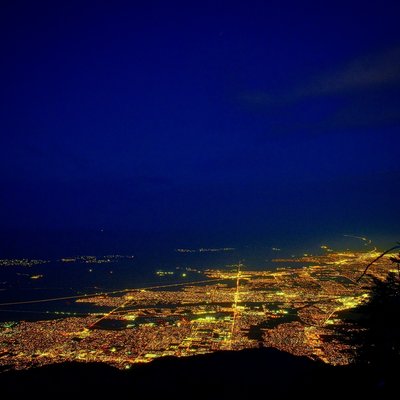 Desert overlookDesert GridThe wider basin these boulders belong to, seen from above at twilight.
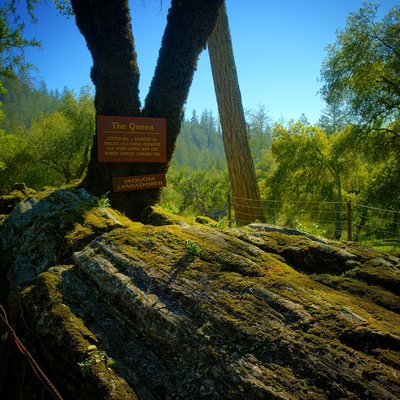 Deep timeThe QueenAnother California entry where geological age is the subject, held in a different kind of stone.