The Petrified Forest
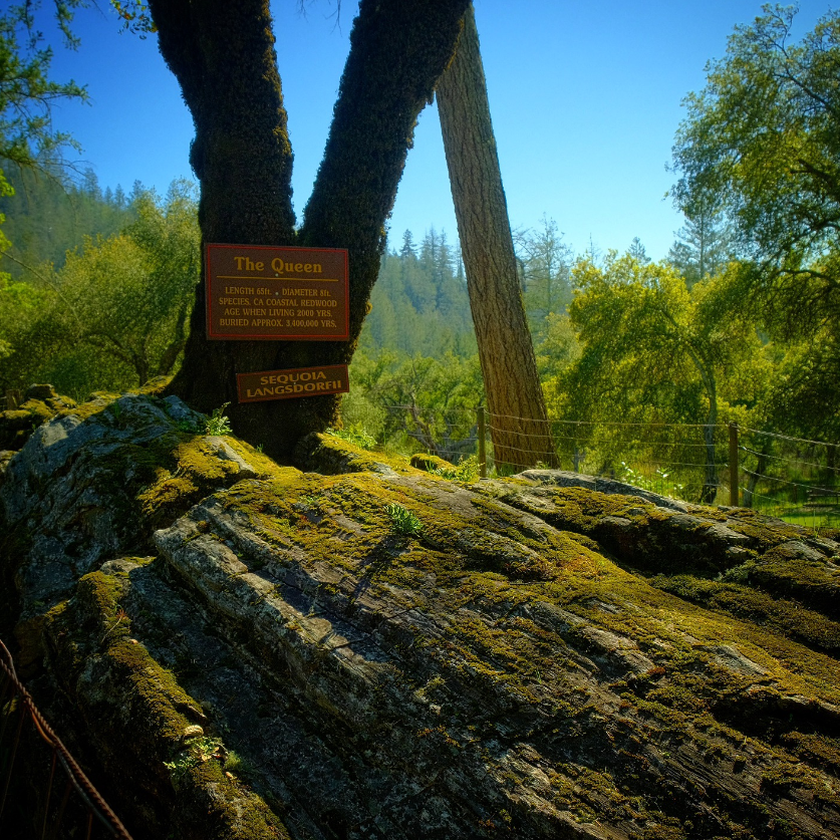
The QueenThe QueenA named petrified redwood at The Petrified Forest in Calistoga, California; the page treats the name as site context, not a species ID. does not need much help from language. It sits low and massive, more like a fallen wall than a tree, with moss softening the surface that time has already hardened. The name is grand, but the object itself is quiet.
What holds the eye is the contradiction. The form reads as wood: length, grain, bark, trunk. But the subject is stone now. A living redwood became a mineral record, and the forest around it kept going.
The photograph works because it keeps that tension close. There is no wide vista to explain the scene. Just a fossilized trunk, green moss, dark creases, and the feeling that the present is only the thinnest layer on the ground.
A tree can fall once and keep speaking for millions of years.
The Petrified Forest in CalistogaCalistoga Petrified ForestA preserved site in Napa County where ancient redwoods were buried by volcanic material and later exposed as petrified trunks. presents petrified redwood trees from the Pliocene EpochPliocene EpochA geologic interval before the Ice Ages; the Calistoga fossil redwoods are commonly described as about 3.4 million years old., about 3.4 million years ago. The site ties the fossils to volcanic activity from the region around Mount St. HelenaMount St. HelenaA North Bay peak associated with the volcanic landscape around Calistoga and the burial story of the petrified redwoods., where ash and mud helped bury ancient redwoods quickly enough to interrupt decay.
Petrified woodPetrified woodWood preserved after burial when minerals carried by water fill or replace original tissues, keeping the tree form while changing the material. forms when mineral-rich water moves through buried wood and gradually replaces or fills the original organic structure. The result can keep the three-dimensional shape of the tree while changing its substance. It looks like wood because the body plan remains; it endures like stone because the chemistry changed.
That is the strange calm of The Queen. It is not a ruin in the usual sense. It is not alive, but it is not gone either. It has crossed categories: tree to fossil, forest to landmark, local object to deep-time evidence.