My Garden
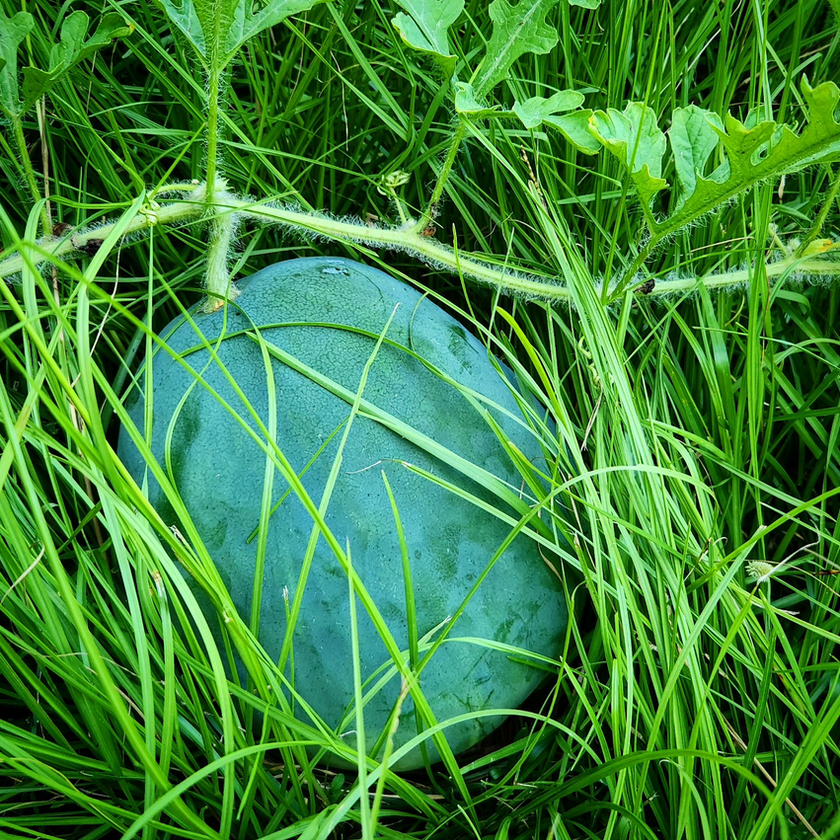
Hidden under serrated leaves and sprawled vines, the watermelon is easy to miss until the eye adjusts. That is part of the photograph's appeal. The fruit is not presented like a trophy on a table. It is still inside the work of the plant, half concealed by the same growth that made it possible.
A Little Bambino watermelonLittle BambinoA compact watermelon type suited to small gardens, usually grown for personal-scale harvest rather than the huge picnic-table fruit most people picture first. makes sense in a small garden because it keeps the drama manageable. The vine still wants room. The leaves still sprawl. But the fruit itself stays intimate enough that one melon can feel like a complete garden event.
What I like here is the tension between concealment and readiness. The rind has that deep green confidence, while the surrounding leaves keep it protected from the worst of the light. It is a summer photograph, but not a loud one. It is about patience, cover, heat, and the quiet timing of harvest.
Good garden photography notices the harvest before it becomes a still life.
Watermelon is mostly read as sweetness, but the plant is all structure first: vines, tendrils, leaves, flowers, and the slow conversion of heat and water into fruit. In the frame, the surrounding green is not clutter. It is context. The leaves explain how the melon got there.
The fruit also carries a practical lesson. Small melons ask the photographer to look closer, and that changes the frame. Instead of making the garden feel abundant by showing everything, the photograph lets one piece of abundance hold the page.
The best part is that the image does not need to announce success. The rind, the shadow, and the vine cover do that quietly. It is a photograph of a watermelon, but it is also a photograph of attention paid at the right week, maybe the right day.